Buena Park Wood Flooring brings more than 20 years of hands-on floor work to wood-flooring in Bellflower, and a large share of the calls we take here start the same way: a house has been empty for a while, and someone needs to know what the floors look like before it is lived in, rented or listed. That is the job this page describes.
An empty house is hard on a wood floor in ways an occupied one is not. Nobody notices the slow drip under a sink, the sun hitting the same boards every afternoon, or the dust settling into a finish that no one cleans. By the time a new tenant, buyer or returning owner walks in, small problems have had months to grow.
We approach these houses as an inspection first and a sales call second. We read the moisture in the wood, trace any soft spots to their source, and write down what we find in an itemized estimate a landlord, seller or buyer can actually use. Then the choice between refinishing, repairing and replacing is made on evidence rather than on a guess.
Bellflower’s Vacant Property Chapter and Its Housing
Bellflower is one of the cities in southeastern Los Angeles County that treats an empty house as a neighborhood concern, not only a private one. That context shapes how owners think about the floors inside, even though the rules themselves are written about the property as a whole.
What the Chapter Says About Its Purpose
Bellflower Municipal Code Chapter 8.40 is titled Registration and Maintenance of Vacant Properties. By its own wording, it was adopted under the city’s police powers for the purpose of eliminating blight, improving aesthetics, and preserving private property values throughout the city. Its sections cover security requirements and a letter of agency, local property management requirements, and registration.
We are floor people, not code consultants, and we do not interpret what the chapter asks of any particular owner. If you hold a vacant property in Bellflower, the city and the chapter text are where those answers come from. What we can say is that the chapter’s stated goal, preserving property values, lines up with why owners call us.
A Renter-Majority City
Of Bellflower’s 23,802 occupied housing units, 14,450 are renter-occupied, which is 60.7 percent. The owner share is 39.3 percent. In a city where most households rent, a house changes hands between tenants far more often than between owners, and each turnover can leave a short gap when the rooms sit empty.
Those gaps are when most of our Bellflower work gets scheduled. A landlord between tenants has a narrow window to sand, repair and let a finish cure before the next lease starts, and the work has to be planned around that date rather than around our calendar. A written cure schedule tells the owner exactly when each room can take furniture again.
An Older Housing Stock
Bellflower has 24,683 housing units, and 40.3 percent of them were built before 1960. The single busiest decade was the 1950s, with 6,298 units, or 25.5 percent of the total. Counting everything built before 1980, the share reaches 71.4 percent. Most of the wood floors we see here are therefore sitting in houses that have been lived in, and left empty, many times.
Looking for wood-flooring closer to Westminster? See Wood-Flooring in Westminster.
What an Empty House Does to a Wood Floor
Wood keeps responding to its surroundings whether or not anyone is home. A vacant house simply removes the person who would have noticed the change early. These are the patterns we find most often when we open up a house that has been closed.
Moisture Nobody Caught
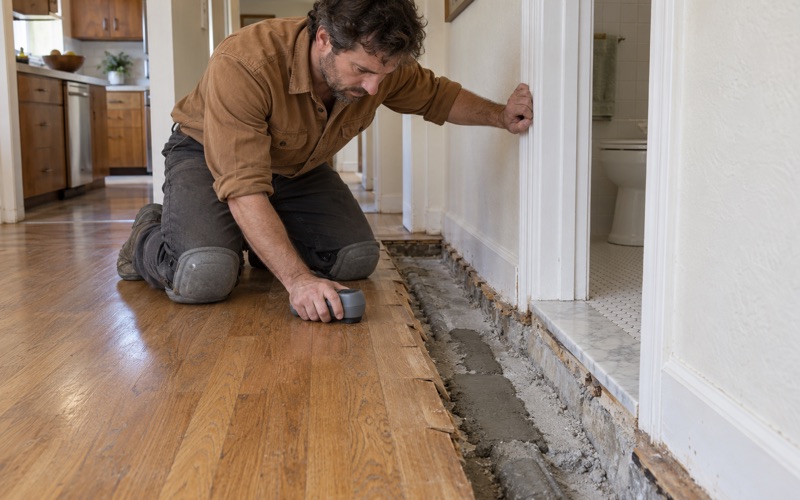
A supply line that weeps, a toilet seal that fails, or a roof leak that runs down an interior wall can wet a floor for weeks without anyone seeing it. The first signs are usually cupping, where board edges rise above the centers, or dark staining along seams. Left longer, boards can crown or buckle and the plywood subfloor can soften.
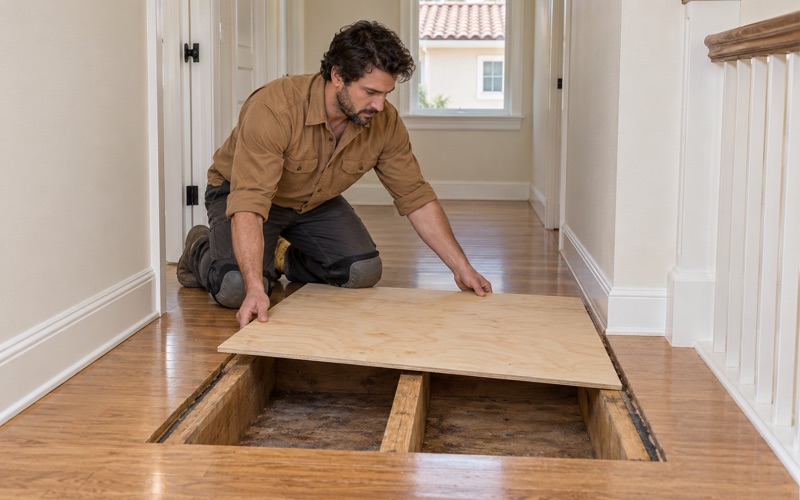
We look closely at the areas around toilets, tubs and exterior doors, because soft spots there usually point to a problem below the finish floor. Before we price any new boards, we trace that softness to the subfloor and the floor joist beneath it. Pricing new flooring over a wet or failing subfloor only moves the problem a year down the road.
Dry Air, Sun and Stillness
A house with the heat and air turned off and the blinds open behaves differently from a lived-in one. Boards near sunny windows can fade or darken unevenly, and seasonal shrinkage can open board gaps that close again once the house is conditioned. We note which gaps are seasonal and which are permanent before recommending any fill or board replacement.
Stillness has its own effects. Dust settles into the finish, pet urine stains from a previous occupant set deeper, and a sticky or peeling polyurethane from an earlier recoat becomes obvious once the rooms are empty. None of those are emergencies, but each one changes what the floor needs before it is shown or rented.
Pests in a Closed House
Drywood termites and powderpost beetles do not need anyone home. Small piles of termite frass along baseboards, or pinholes in a board’s face, tell us the wood itself has been damaged. When we find that, we stop and recommend the owner bring in a pest professional first, since boards replaced before a termite fumigation may simply be damaged again.
Checking a Floor Before Anyone Moves In
The inspection is where most of the value lies. A careful walk-through, backed by written readings, gives an owner a clear list of what the floor needs and what it does not, and it gives a seller or landlord a record to share with the next occupant.
Readings Written Down
We measure moisture content in the wood with a wood moisture meter in several rooms and compare the numbers against each other. Where a floor sits on concrete, we test the slab as well, using an ASTM F2170 in-situ relative humidity test or a calcium chloride moisture test. Every reading goes into the estimate, so the decision to repair or replace rests on recorded numbers.
Those readings also matter if the damage came from a leak that may be covered. Photos and moisture readings taken before any demolition give an insurance adjuster something concrete to review, and they keep the conversation about what failed rather than about what the floor looks like after we have already opened it up.
Hidden Materials in an Older House
Many Bellflower houses predate 1978, which is the cutoff for the EPA Renovation, Repair and Painting rule. We use lead-safe work practices on those houses, including containment and careful cleanup, because sanding near painted trim and baseboards can disturb old paint layers.
Flooring of that era can also hide 9x9 floor tile or black mastic beneath carpet or a later floor. Those materials may contain asbestos, and we treat any old adhesive, including parquet adhesive, as a question for an asbestos survey before we sand or scrape. That step comes first, before a price is set.
What Turns Up Under Carpet
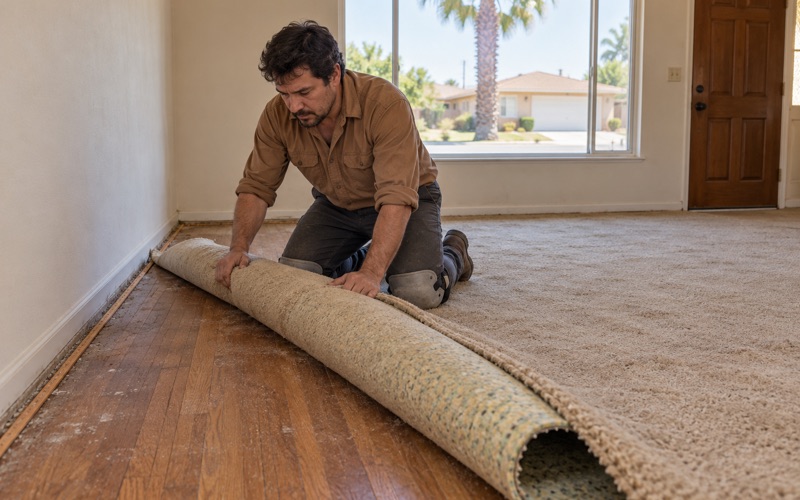
Pulling carpet in an older house can reveal wood that was covered for decades, with carpet tack strip holes along the walls and old staples across the field. We assess what we find board by board, checking wear layer, damage and species, before anyone talks about replacement. Often the wood under the carpet is the best floor in the house.
Refinish, Repair or Replace Before Renting or Selling
Once the readings and the walk-through are done, the choice usually falls into one of three paths. We price each one separately in writing, so an owner can weigh the cost against how long the house will be rented or how soon it will be listed.
When a Refinish Is Enough
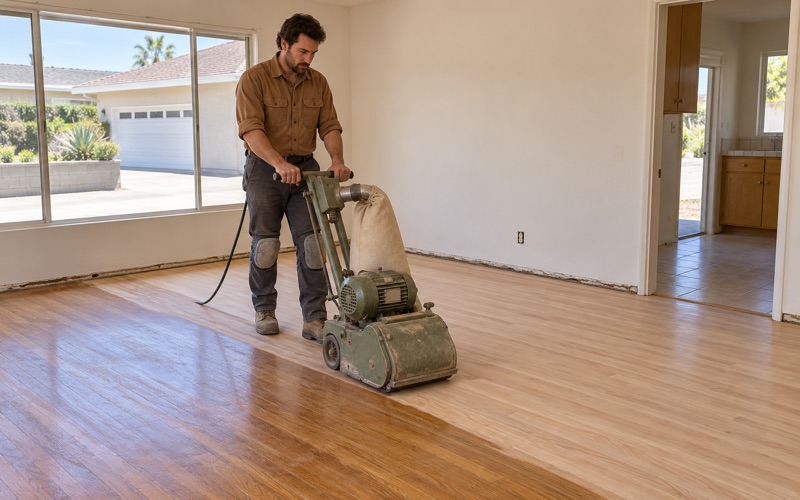
A floor that is sound but tired often needs only a screen and recoat, which lightly abrades the existing finish and adds a fresh coat. Deeper scratches, orange oak tones or gray discoloration call for a full sand with a drum sander, edger and orbital sander, working through a proper grit sequence and using a dustless sanding system where the house allows.
For finishes, we choose waterborne polyurethane, oil-modified polyurethane or a hardwax oil finish from products legal under SCAQMD Rule 1113 and its 275 g/L wood-coating limit. A rental that will see heavy traffic usually gets a durable sheen level that hides wear, while a house going on the market may get a lighter, more neutral color that photographs well.
Repairs That Keep the Floor
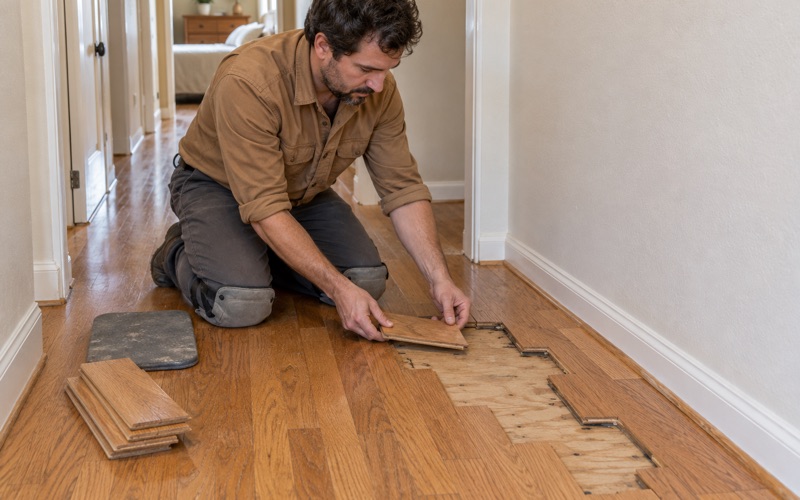
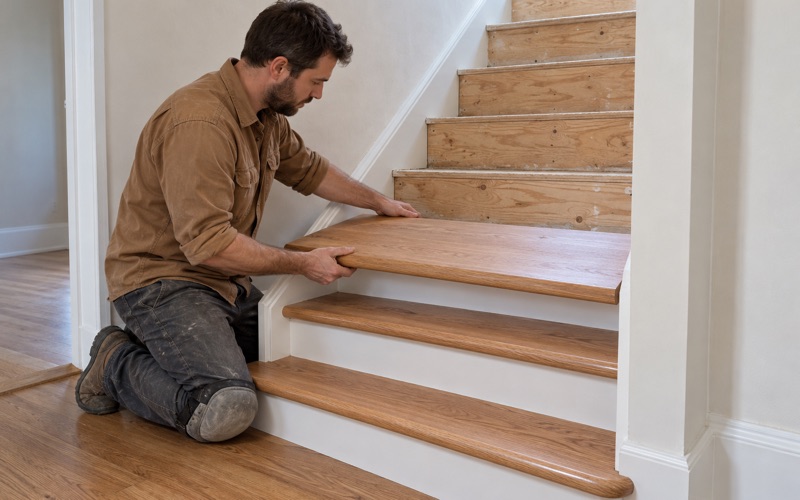
Where damage is local, board replacement and a weave-in repair let us remove damaged boards and lace in new ones that match the existing layout, so the patch disappears after sanding. We also handle stairs, pricing each stair tread and stair riser individually rather than folding them into a square-foot number, which keeps a staircase from inflating the total.
Old parquet deserves the same restraint. We restore, patch or lighten it rather than tearing it out by default, once any adhesive question underneath has been answered. Parquet that has sat under furniture in an empty house often cleans up far better than its first appearance suggests.
When Replacement Makes Sense
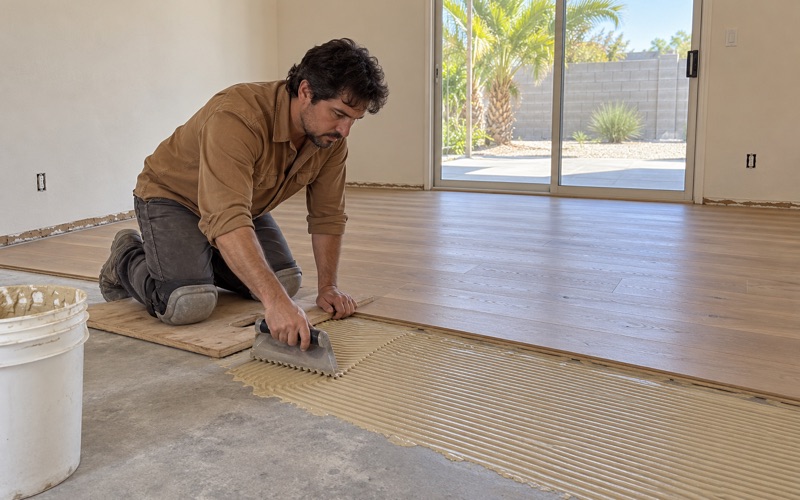
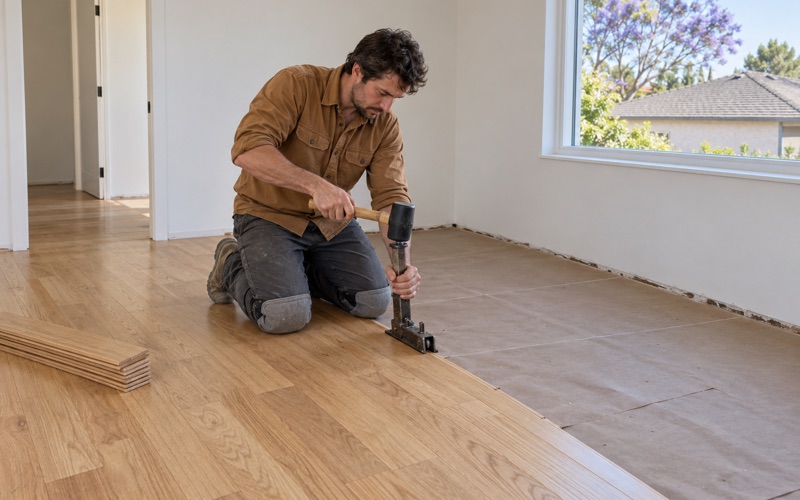
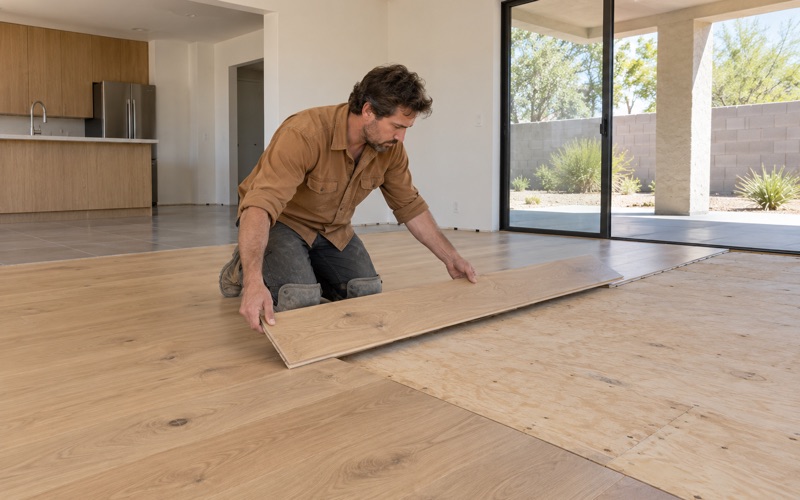
Replacement is the right answer when a floor has been under water long enough to delaminate engineered veneer, when the wear layer is gone, or when subfloor repairs require the finish floor to come up anyway. We then compare prefinished and site-finished hardwood, nail-down, glue-down and floating installation, and species such as white oak, red oak, hickory and maple against the owner’s budget and timeline.
New wood is given time to acclimate, and the installation follows NWFA installation guidelines, with a proper expansion gap at the walls and a vapor retarder where the substrate calls for one. Shoe molding, reducer strips and T-molding are finished so the transitions between rooms look deliberate rather than patched.
Working Alongside the City’s Inspections
Bellflower runs its own Building & Safety Division, and its commonly requested inspections are re-roof work, electrical service, water heater and re-wire. A vacant house being readied for its next occupant often has one of those trades in the house at the same time we are, so we plan our sanding and finish coats around their visits and ask the owner to confirm anything beyond the floor with the division directly.
The result we aim for is simple: a floor that is dry, sound and finished, a written record of what was found and fixed, and a clear date when the house can be furnished. For a Bellflower house coming out of a vacancy, that record is often as useful to the owner as the floor itself.
- 20+ Years in Wood Flooring
- Itemized Written Estimates
- Lead-Safe Sanding