Buena Park Wood Flooring has spent more than 20 years on wood-flooring in East Whittier and the neighboring communities, and the work here tends to split in two. Some calls come from landlords turning over units in older apartment buildings. Others come from owners living in detached houses a block away, often on the same street.
Those two jobs share tools and little else. An apartment floor has to survive the next tenant, fit a turnover window and come with paperwork a property manager can file. A house floor has to suit a household that may be staying home through the work, with finish schedules and furniture moves planned around them.
We price both the same way: a written, itemized estimate that names every line, from board replacement to shoe molding, so an owner, landlord or tenant can read exactly what they are paying for before any sanding starts.
No City Hall: The County Writes the Rules Here
East Whittier is an unincorporated community of Los Angeles County with no city government of its own. The Board of Supervisors governs it, and the community sits in the Fourth Supervisorial District, represented by Supervisor Janice Hahn. Until 2012 the area was called East La Mirada, when it was renamed East Whittier.
That matters for flooring because the rules a landlord works under here are County rules, not a city’s. When we plan a floor job in a rental building, the questions about timing, notice and registration run through County departments rather than a municipal counter.
What the County Rent Ordinance Covers
The County’s Rent Stabilization and Tenant Protections Ordinance, Chapter 8.52 of the County Code, is administered by the Department of Consumer and Business Affairs, known as DCBA. Its bulletin, revised March 2, 2026, says fully covered units are rental units in unincorporated areas on a property with two or more rental units and a certificate of occupancy issued on or before February 1, 1995.
In a community where so little was built after the 1980s, that date captures most of the rental stock. A landlord who asks us to refinish a unit in a fourplex or a larger complex here is usually working inside that ordinance, whether or not the floor itself has anything to do with rent.
The 1.919 Percent Figure
The same bulletin sets the allowable increase for fully covered units from July 1, 2026 through June 30, 2027 at 1.919 percent. We state that figure only because landlords raise it with us when they weigh a full refinish against a screen and recoat.
We are floor people, not lawyers, and DCBA itself says its bulletin is not legal advice. What we can do is give a landlord a clear number for the floor, so the decision about the building rests on accurate costs rather than guesses.
Looking for wood-flooring closer to Fullerton? See Fullerton Wood-Flooring.
Floor Work in East Whittier’s Older Apartment Buildings
Of the 1,227 renter households in East Whittier, 940, or 76.6 percent, live in buildings of five or more units. Only 81 of the community’s 3,412 housing units were built after 1989, and none in the 1990s. The apartment stock is old, and so are most of the floors, subfloors and thresholds inside it.
The County Housing Element notes that Public Health regularly inspects apartments and condominiums of five or more units, while single-family homes are inspected only on a complaint. For a manager of a larger building, a soft spot by a bathroom door or a lifted board in a hallway is worth fixing before it becomes a line on someone else’s report.
Turnover Between Tenants
Most of our apartment work lands between leases. With 83.7 percent of East Whittier renter households having moved in during 2010 or later, units change hands often, and each turnover is the window to sand out pet urine stains, replace a few cupped boards or apply a fresh coat before the next move-in.
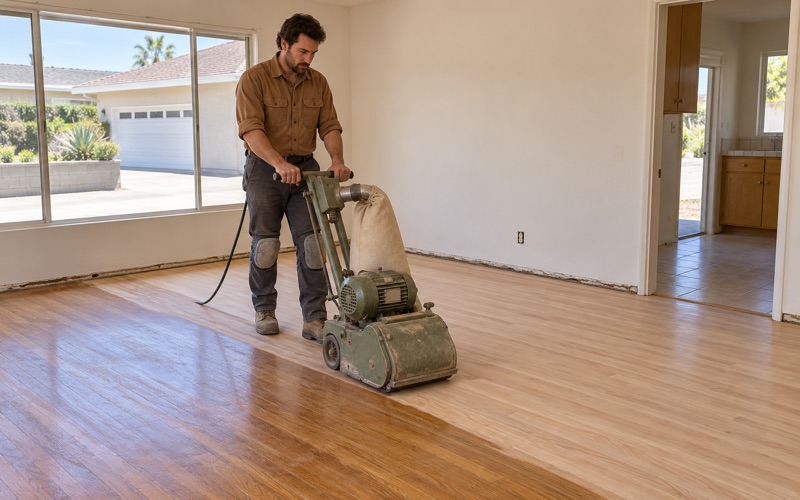
We plan the sequence around the turnover date. A screen and recoat can often fit inside a short vacancy, while a full sand through the grit sequence needs more days for the finish to cure. The written cure schedule tells the manager when the unit can be shown and when furniture can go back in.
Records a Property Manager Can Keep
Our itemized estimates list each repair separately: a weave-in repair at a doorway, a reducer strip at a kitchen, stair treads and risers priced per piece rather than buried in a square-foot rate. That separation matters when a unit’s move-out condition is weighed against normal wear and tear.
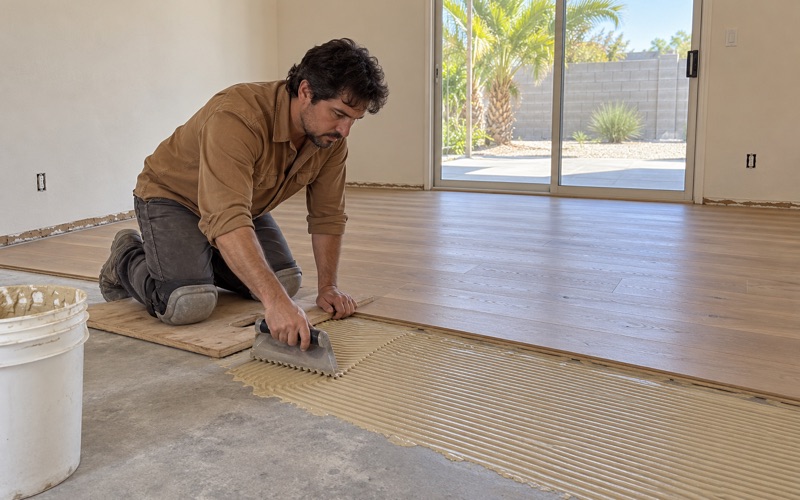
Before any material is ordered, we take readings with a wood moisture meter and record the moisture content. Where new flooring goes over concrete, we test the concrete too, using an ASTM F2170 in-situ relative humidity test or a calcium chloride moisture test, and write the numbers down for the file.
Material That Holds Up Between Leases
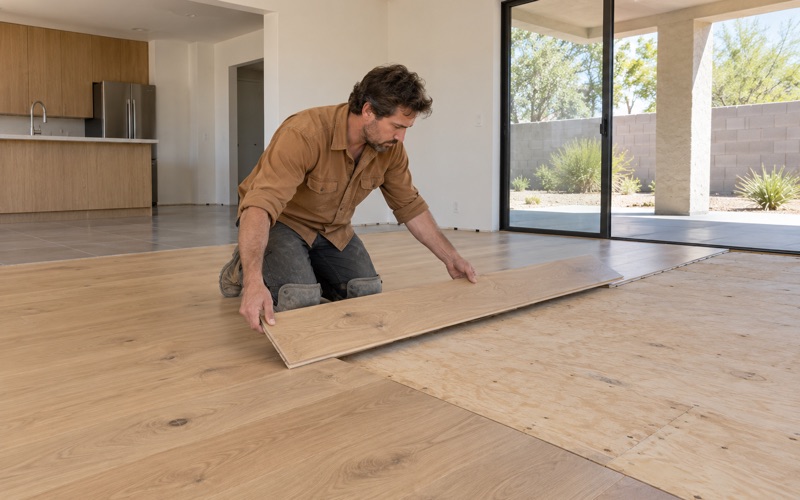
When a rental floor is past sanding, we talk through material with the owner before anything is ordered. Prefinished hardwood or an engineered floor with a thick wear layer can be installed and walked on sooner than a site-finished floor, while a harder species with a higher Janka hardness rating, such as white oak or hickory, shrugs off more furniture drag.
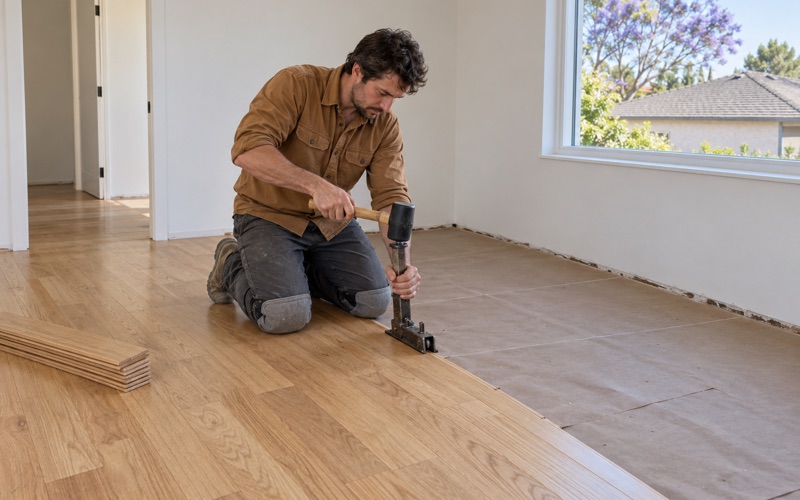
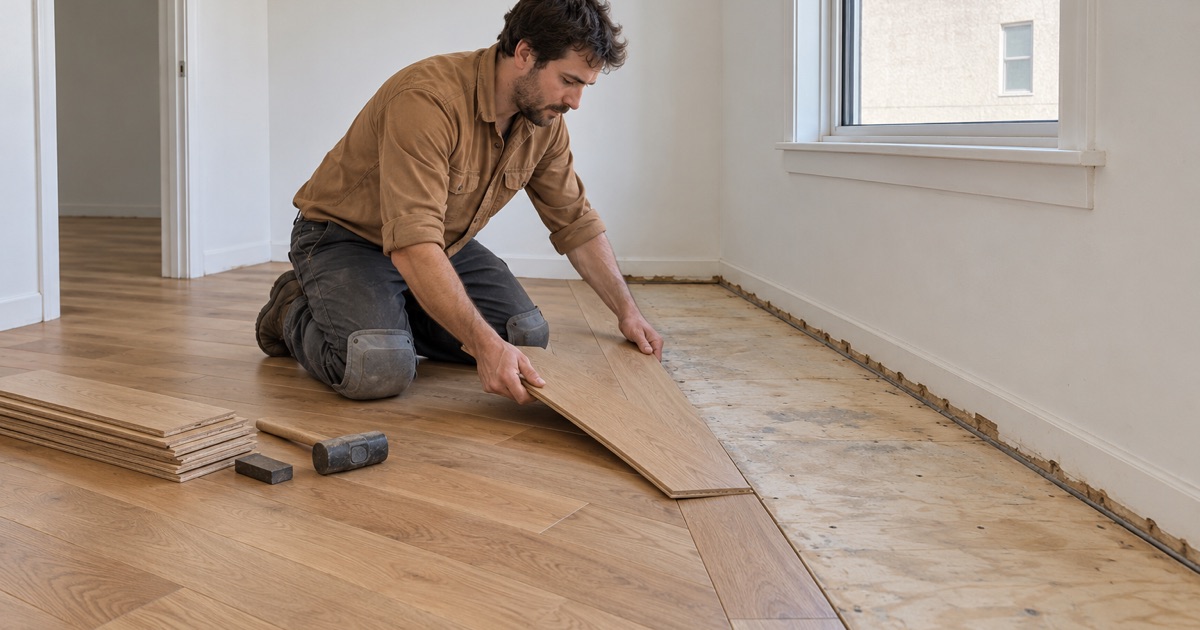
Upper-floor units add another question. Where boards go over a neighbor’s ceiling, we discuss acoustic underlayment and the building’s own rules before choosing between glue-down, floating and nail-down installation. Every new board acclimates on site, and we follow NWFA installation guidelines for expansion gaps at walls and thresholds.
Older Buildings, Older Rules
Federal lead rules reach most of this stock: 95.3 percent of East Whittier’s units predate 1980, and houses and apartments built before 1978 fall under the EPA Renovation, Repair and Painting rule. We follow lead-safe work practices on that pre-1978 housing, which shapes how we contain dust around painted trim, baseboards and doorframes.
Adhesive gets the same caution. Old parquet or 9x9 tile laid over black mastic is treated as a possible asbestos question before anyone scrapes it, and we recommend an asbestos survey rather than guessing. For finishes, we use products legal to apply in the South Coast air basin under the SCAQMD Rule 1113 wood-coating limit of 275 g/L.
County Registration Before Any Increase
Landlords in older buildings often ask us about the County process while we are measuring a unit, so we keep our answer to what the DCBA bulletin says. Before an increase, each fully covered unit must be registered with DCBA with current fees paid, and the tenant must have the County’s Notice of Tenant Rights.
The bulletin also requires at least 30 days’ written notice and 12 consecutive months since the last increase. We do not tell anyone how to apply those rules to their building; that question belongs with DCBA or the owner’s own adviser. Our part is the floor.
Where Floor Work Fits
A landlord in the middle of that process wants floor costs that are clean and dated. Our estimates carry the date, the unit and the scope, and they are written so a tenant reading one sees the same numbers the owner does.
When a tenant is still living in the unit, we coordinate room by room and hand over the cure schedule in writing. A household that knows when the bedroom can be walked on in socks and when it can be furnished again puts up with the dust far more readily than one left guessing.
Owner Houses on the Same Streets
Walk a block from an apartment complex and the housing changes completely. Of East Whittier’s 2,105 owner households, 2,102, or 99.9 percent, live in detached houses, and 55.0 percent of all housing units in the community were built in the 1960s. The 2020 census counted 10,394 residents on 1.09 square miles.
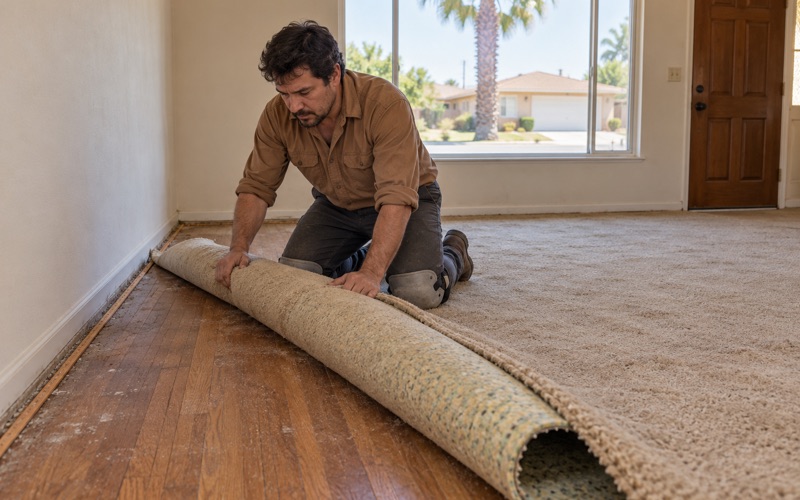
That concentration means many owners are dealing with floors of the same generation at the same time. Carpet that went down decades ago is being pulled up, and what sits underneath varies from house to house, so we look before we quote.
What Is Under the Carpet
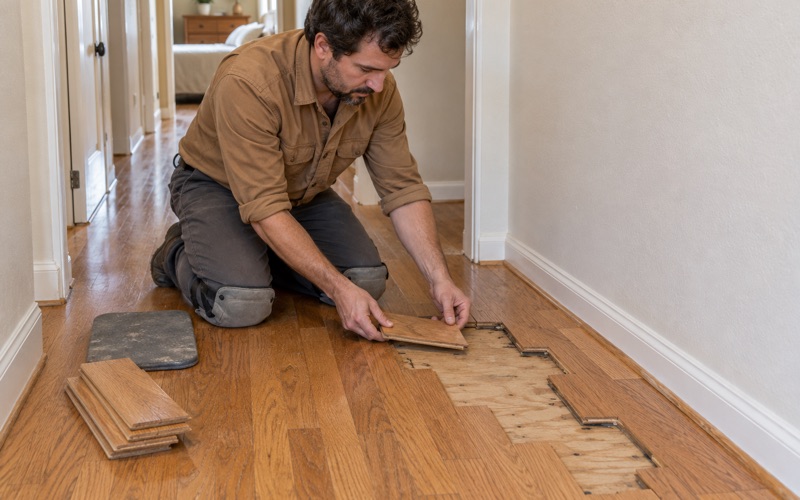
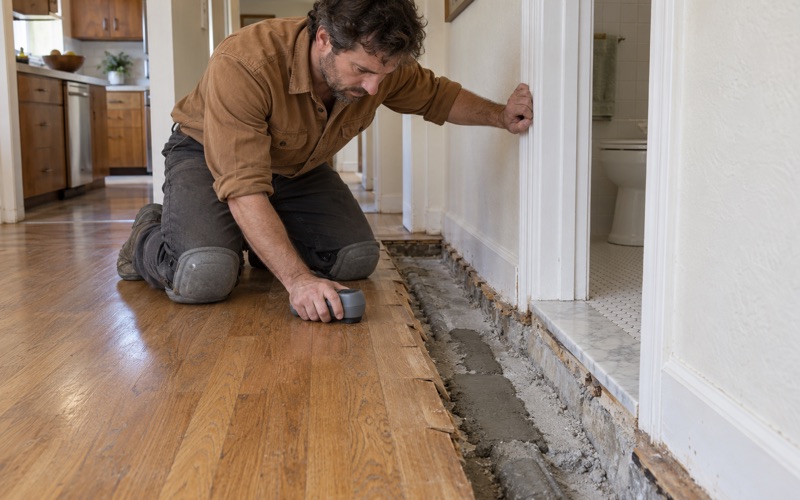
When an owner finds oak strip beneath old carpet, we assess it board by board: tack strip holes, staple damage, pet stains, board gaps and any cupping or crowning. Many of those floors can sand back into service with a weave-in repair here and there, and a replacement quote only comes after that inspection says it is needed.
Where a house has old parquet, we look at restoring, patching or lightening it before recommending removal. The adhesive underneath is handled as a possible asbestos question first, which keeps a simple refinish from turning into an unplanned abatement job halfway through.
Soft Spots, Water and Stairs
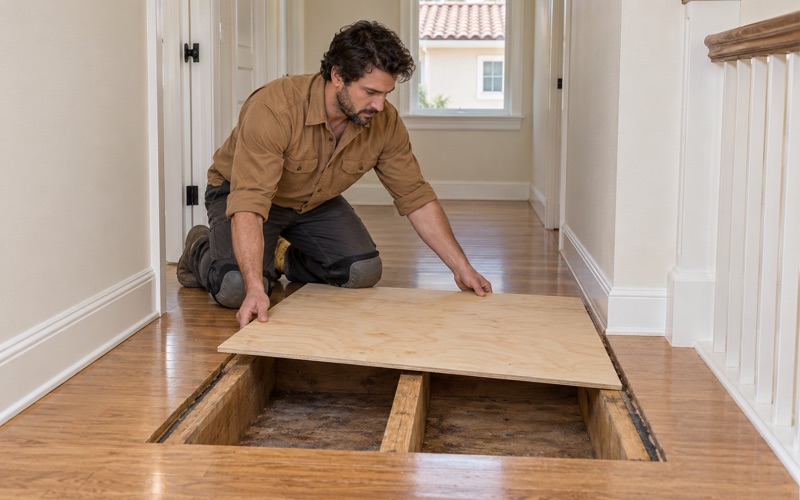
Soft spots near toilets, tubs and exterior doors are traced to the plywood subfloor and floor joists before we price any finish floor. If a slab leak or a water event is involved, we rebuild after the plumber finishes and after drying, with photos and moisture readings an insurance adjuster can use.
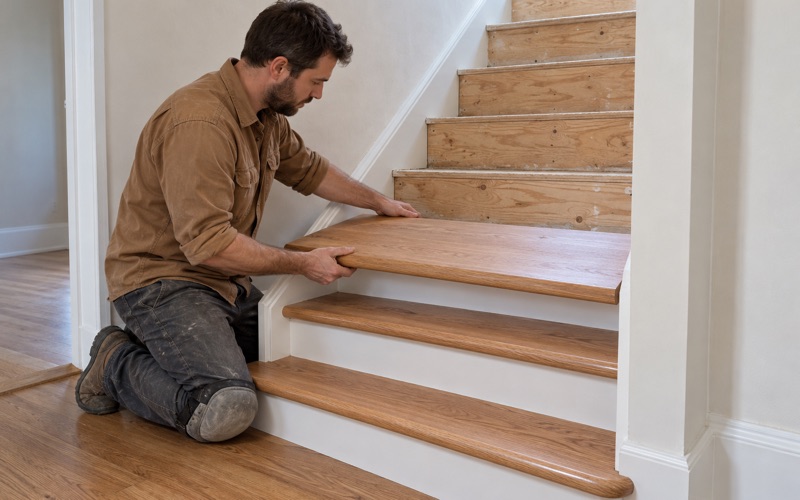
In East Whittier, 30.3 percent of owner households are headed by someone 65 or older, and a household that stays home through the job needs a plan. We phase rooms so a bedroom and a path to the kitchen stay usable, price stair treads, risers and nosing individually, and choose between waterborne polyurethane and hardwax oil finish with the household’s daily routine in mind.
Color, Sheen and a Floor That Matches
Floors of the same age often share the same complaints: orange oak that has ambered under years of finish, gray patches where the coating wore through at a hallway, or blotchy stain from an earlier refinish. We sand with a dustless sanding system, sample stain colors on the actual boards and settle the sheen level before the first coat goes down.
When only part of a house is being redone, matching matters as much as color. We lace new boards into the old ones rather than stopping at a hard line, add T-molding or a reducer strip only where a real height change calls for it, and reset shoe molding once the finish has cured.
- 20+ Years in Wood Flooring
- Itemized Written Estimates
- Lead-Safe Sanding