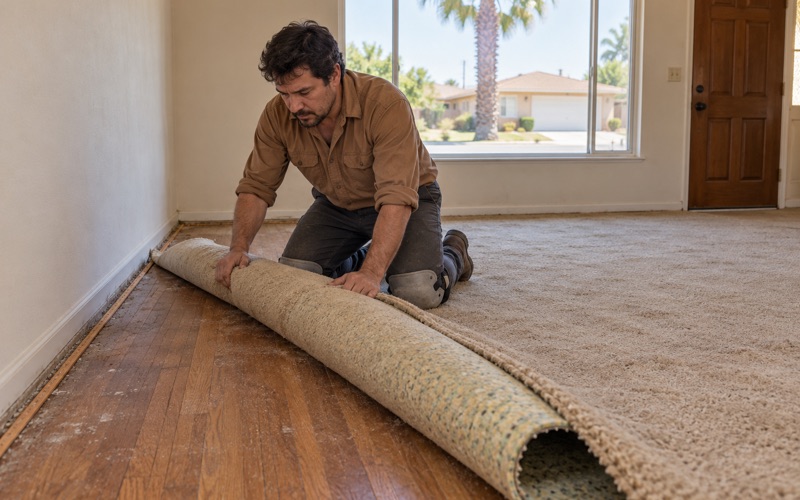
Buena Park Wood Flooring brings more than 20 years of work to wood flooring in El Segundo, and lately one question comes up before any other: should the floors wait for the new doors and windows, or go in first? We install, refinish and repair hardwood, and we plan that work around whatever else is happening to the house that year.
In this city, what else is happening is often a sound insulation job. Crews replace exterior doors and windows and add ventilation, and a floor project scheduled in the wrong order can mean scuffed new finish, a door that drags on a raised floor, or a threshold that has to be redone. We sort out the sequence before anything is ordered.
We also measure moisture in the wood and in any concrete underneath before material is ordered, and we write the readings down. Every job comes with an itemized written estimate and a written cure schedule, so a household that stays home through the work knows when each room can be walked on and furnished again.
El Segundo’s Sound Insulation Program in 2025
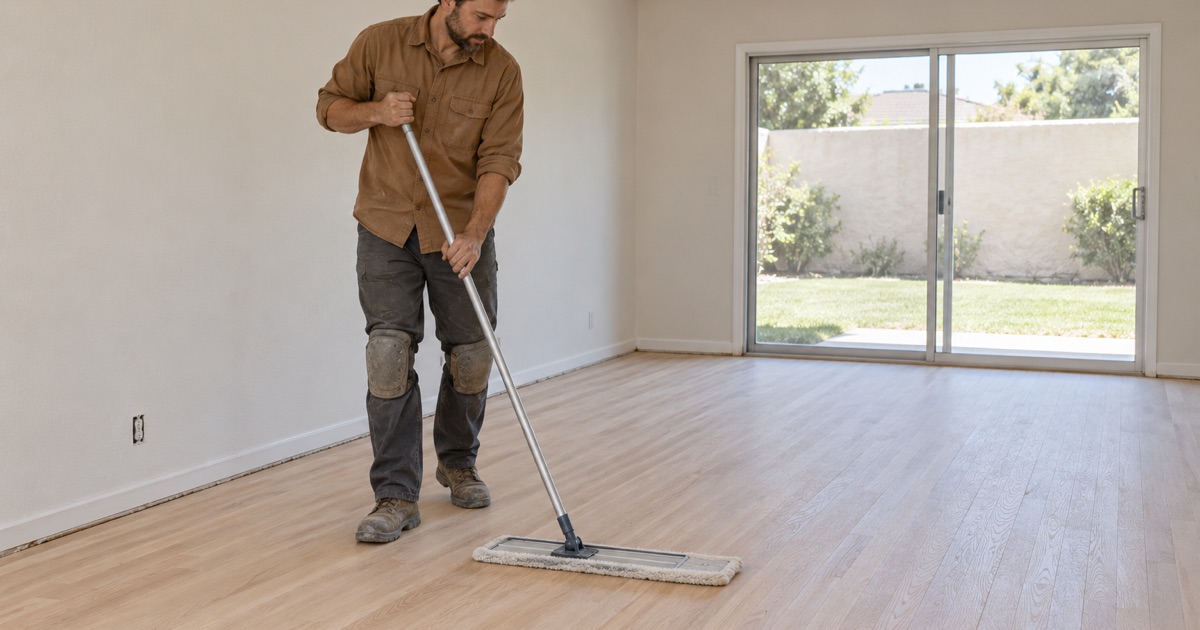
Los Angeles World Airports relaunched the LAX Residential Sound Insulation Program in May 2022 to treat homes in El Segundo and Los Angeles that were not treated in the prior program, at no cost to the homeowner. LAWA’s August 2025 briefing to the LAX Roundtable puts the budget at $143 million from an FAA Airport Improvement Program grant, spread over a seven-year timeline.
This is not a first round. The City of El Segundo ran its own program from 1992 to 2018 and insulated 1,900 dwelling units. The relaunch is aimed at the homes that were left out, which means treated and untreated houses can sit on the same block, and a floor contractor has to ask which kind we are standing in.
Where the El Segundo Numbers Stand
The August 2025 briefing counts 1,239 eligible El Segundo dwelling units. Of those, 139 have applied and been mitigated, 393 are in progress, 34 declined or opted out, and 673 had not applied. That last figure matters most for floor planning, because more than half of the eligible units have not yet started the process.
For a homeowner with a floor project in mind, that open question is the planning problem. If your household has been told it is on the eligible list and has not applied, new doors and windows could arrive while the floor is still fresh. Deciding now whether the floor goes in before or after them saves paying for the same threshold twice.
Bid Groups Under Way
Construction moves in bid groups. The briefing lists an El Segundo pilot group of 55 units and Bid Group 2 with 74 units as completed. Bid Group 4, with 78 units, and Bid Group 6, with 51 units, were under construction in August 2025, so installers are working in the city as floor projects are being planned.
Two more groups were queued behind them: Bid Group 8, 56 units, pending award of contract in August 2025, and Bid Group 10, 84 units, pending a November 2025 schedule. When installers show up at a neighbor’s house, it is a reasonable moment to check where your own home stands and to bring us into the timing conversation early.
Looking for wood-flooring closer to Palos Verdes Estates? See Wood-Flooring in Palos Verdes Estates.
Who Qualifies and What Gets Installed
LAWA states the eligibility rules plainly. A home has to sit within the 2020 NEM 65 dB noise contour, be zoned residential, and have been built before October 1, 1998. Homes inside the 70 dB contour are treated ahead of homes in the 65 dB contour, and homes just outside the line may become eligible later through what the program calls block rounding.
The Interior Noise Test
Eligibility on paper is followed by a measurement. The program looks for an average interior noise level of 45 dB or greater, and 30 percent of participating homes are acoustically tested, with loudspeakers simulating aircraft noise while levels are measured from inside the rooms.
We do not decide who qualifies, and we cannot tell anyone whether a particular address is in. That answer comes from the program itself, which keeps a showroom at 9100 Sepulveda Boulevard, Suite 109. What we can do is plan the floor so it does not fight with whatever the program installs, before or after it arrives.
Doors, Windows and Ventilation
The treatments are sound-rated, energy-efficient doors and windows and improved ventilation systems, with a stated goal of at least a 5 dB improvement in interior noise level. Floors are not on the list. Nothing in the program material names flooring, so a floor project stays the homeowner’s own, planned and paid for separately.
That split makes sense once you consider where the noise starts. The city’s own environmental study describes a noise environment dominated by airport and vehicular traffic, including traffic along I-105, Imperial Highway and Pacific Coast Highway. Sealing the openings in the exterior deals with that. The floor belongs to a different sound story, covered further down.
Sequencing Floors Around New Doors and Windows
The order of work is the practical question, and the answer depends on how far along your house is. Our working rule is simple: anything that changes the height of the floor at an exterior door should be settled before the door is set, and anything that only changes the surface can wait until the installers are gone.
Floor Height and New Thresholds
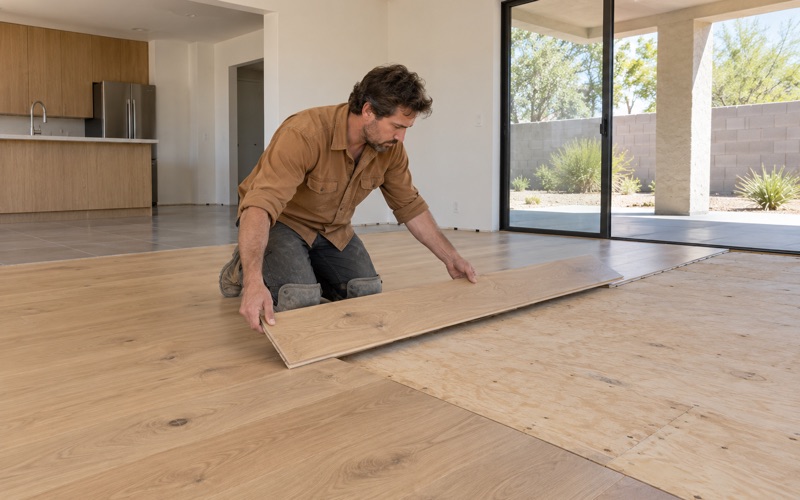
A new exterior door is hung to the floor that is there on the day it goes in. If we later lay a new floor over an old one, or swap thin carpet for a thicker nail-down floor on a plywood subfloor, the finished surface can rise enough to rub the door bottom or leave the threshold sitting low against the boards.
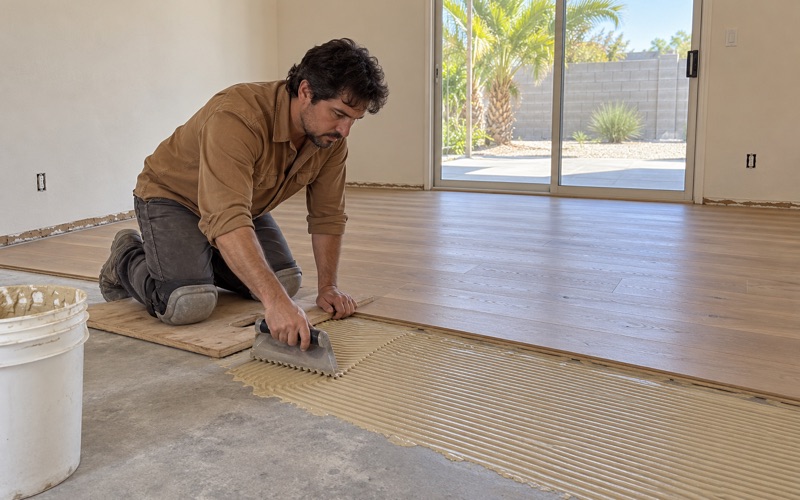
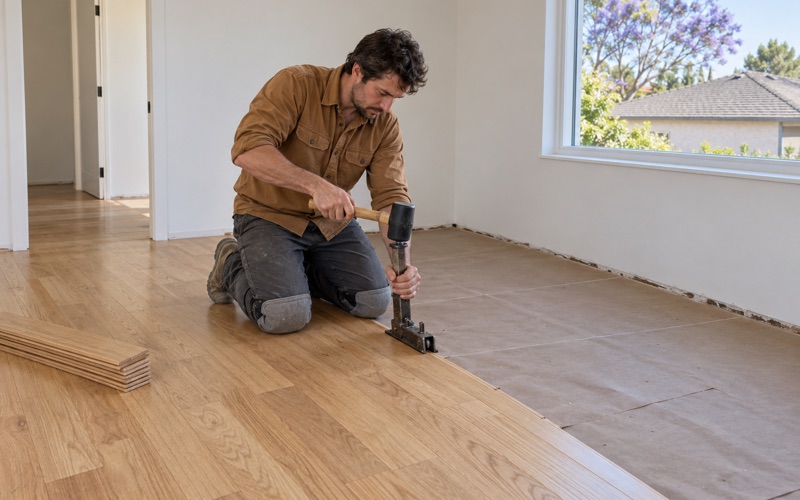
When a full replacement is planned, we would rather install first, or at least put the finished floor height in writing so you can pass it along before the door is ordered. Transitions at thresholds and between rooms get a reducer strip or T-molding sized to the final surfaces, with shoe molding set after the baseboards are settled.
Refinishing After the Crews Leave
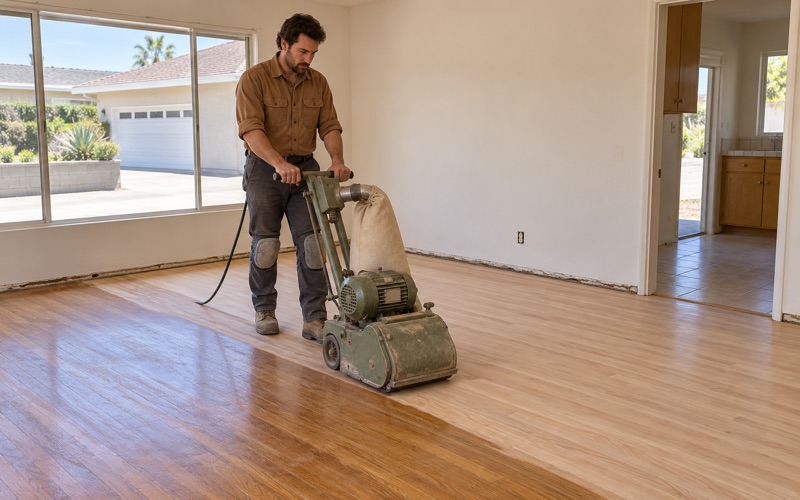
Sanding and refinishing is the opposite case. Window and door installation brings ladders, old frames, debris and work boots across the floor, and a fresh coat of polyurethane scratches easily in its first weeks. If the floor only needs a screen and recoat or a full sand and finish, we schedule it after the installers have finished and cleaned up.
We run a dustless sanding system with a drum sander, edger and orbital sander, and the grit sequence is set by what the existing finish and boards show. Waterborne polyurethane, oil-modified polyurethane and hardwax oil finishes are chosen from products legal to apply in the South Coast air basin under the 275 g/L wood-coating VOC limit in SCAQMD Rule 1113.
Moisture Before Material
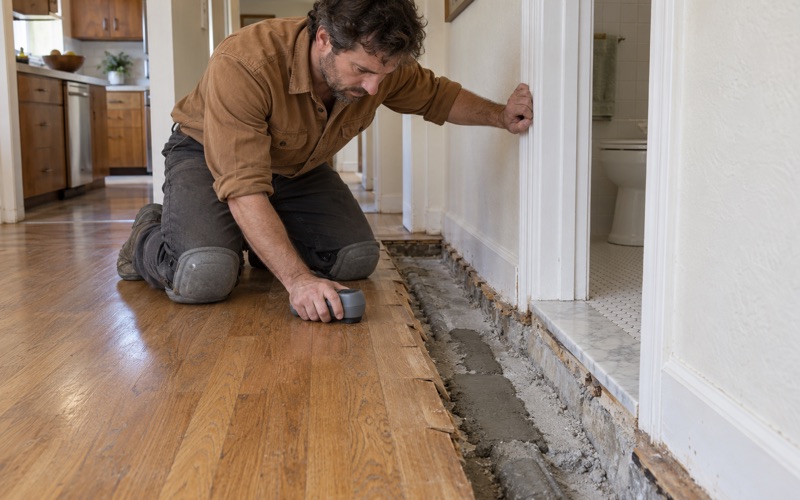
New doors, windows and ventilation change how air moves through a house, so we take readings rather than assume. A wood moisture meter checks the existing floor and the new boards, and where concrete sits underneath we run an ASTM F2170 in-situ relative humidity test or a calcium chloride moisture test before choosing glue-down, floating or nail-down installation.
Acclimation follows the NWFA installation guidelines, and the moisture content readings go into the job file. If the program’s work happens after our floor goes in, those written numbers give you a baseline to compare against should cupping, crowning or board gaps show up later.
Sound Inside the House and Planning Your Floor
The program’s work is an outside-in fix. It targets aircraft and traffic noise coming in through doors and windows. What happens inside the house, such as footsteps, dropped keys or a chair dragged across a room, is shaped by what you walk on, and that part stays in your hands.
What Changes When Carpet Comes Out
Pulling carpet for hardwood is one of the most common requests we get, and it changes how a room sounds. Carpet and pad soak up footfall, while a hard floor reflects it. Once the outside is quieter, those inside sounds can stand out more than they did before, which is worth knowing before the carpet tack strip comes up.
We do not quote noise numbers for floors, because any figure depends on the whole assembly, the room and the test, not on the board alone. What we do is walk through the choices that tend to matter: board thickness, installation method, an acoustic underlayment under a floating or glue-down floor, rugs in hallways, and felt pads under chairs.
Species matters for wear more than sound. White oak and hickory rank higher on the Janka hardness rating than many softer choices, and on engineered boards we look at wear layer thickness and engineered core construction so the floor can take a future sanding if the household stays for decades.
Rentals, Condos and Shared Floors
Renters hold 57.5 percent of occupied units in El Segundo, and the five-to-nine-unit building is the most common rental type. In those buildings a hard floor sits above someone else’s ceiling, so the owner’s written approval comes first, and in a condominium the association’s alteration rules under Civil Code 4760 apply as well.
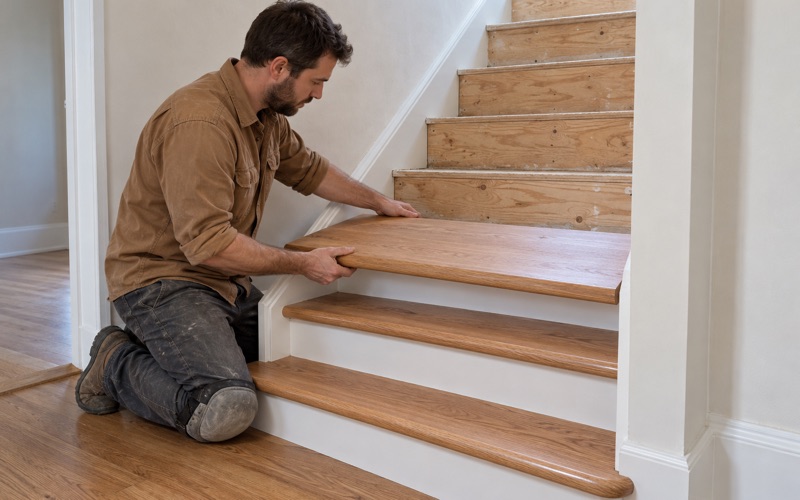
For landlords, an itemized written estimate separates a floor replacement from normal wear and tear and leaves a paper trail if a security deposit question comes up later. Tenants and sellers can use the same document to see exactly what was priced, room by room, including stairs priced per tread and riser.
Older Houses and the Year Built
El Segundo’s housing is older than many people assume. Of the city’s units, 73.4 percent were built before 1980, and the 1960s were the largest building decade at 21.4 percent. On pre-1978 housing we follow lead-safe work practices under the EPA Renovation, Repair and Painting rule before any sanding starts.
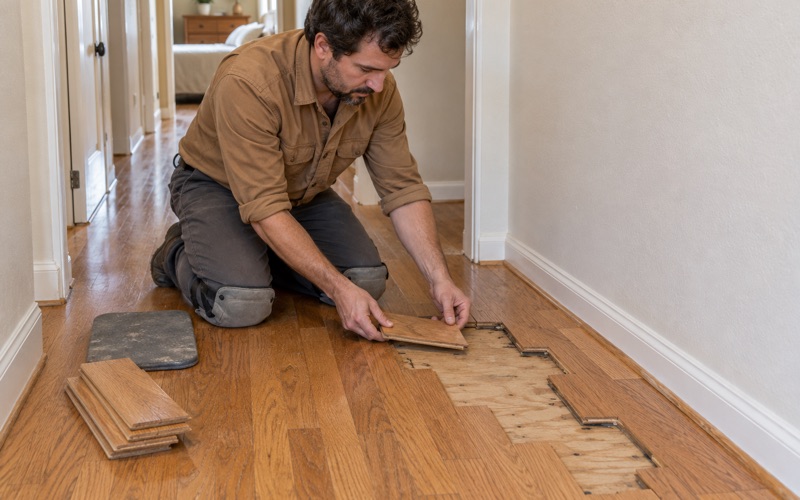
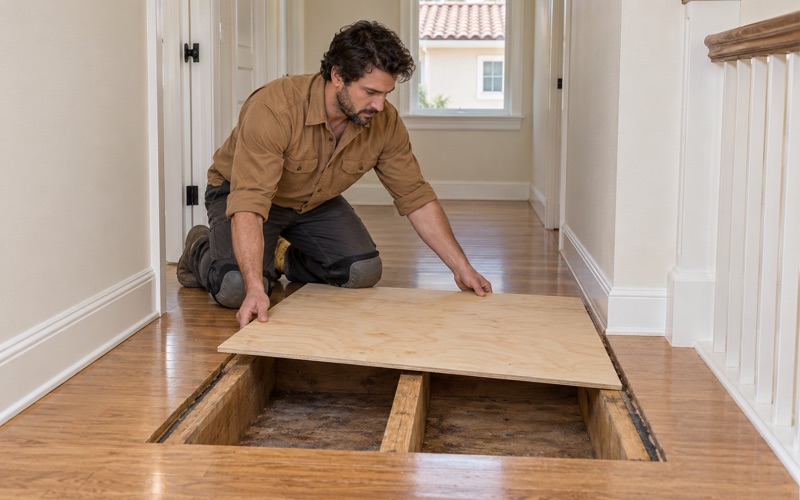
Old black mastic under parquet or 9x9 asbestos floor tile is treated as a possible asbestos question before anything is scraped, and an asbestos survey comes before adhesive removal. Soft spots near toilets, tubs and doors are traced down to the subfloor and floor joists before a finish floor is priced, so the estimate reflects what is actually there.
A Sensible Order of Operations
If your house is still waiting on the program, the choice is usually straightforward: replace the floor now if its height will change, or hold a refinish until the installers finish. If the new doors and windows are already in, we work to the new thresholds and leave the program’s installation untouched.
Either way, we start with a visit, moisture readings and a written estimate, and we set dates around the program’s schedule rather than guessing at it. With the order of work settled, the new doors keep their seal, the finish stays unmarked, and the floor is ready for the quieter house around it.
- 20+ Years in Wood Flooring
- Itemized Written Estimates
- Lead-Safe Sanding