Buena Park Wood Flooring has spent more than 20 years on wood-flooring in Garden Grove and the neighboring cities, and a good share of that work starts with a deadline rather than a design idea. An owner or landlord receives a written notice, a date is attached to it, and a damaged floor sits somewhere on the list of repairs.
This page is about that situation. We scope the floor, write down what we find, and plan the repair so it is finished, cured and ready to be looked at before the date on the notice arrives. Deciding whether a floor meets the city’s standard is the officer’s job, not ours, so our role is to make the repair itself clear, documented and on time.
The same approach serves a household that simply wants a worn floor fixed properly. We measure moisture before ordering material, trace soft spots to their source, and hand over an itemized estimate you can show to a tenant, a buyer or an adjuster.
How Garden Grove Enforces Housing Standards
Garden Grove’s Code Enforcement Officers enforce housing standards using the 2021 International Property Maintenance Code as well as the 2022 California codes. The city’s Substandard Housing page does not publish a list of conditions, and it does not mention floors, so we never tell a client what an officer will or will not decide about a particular room.
From Complaint to Notice of Violations
The process usually begins with a complaint. An officer investigates, prepares a Notice of Violations, and directs repairs or demolition to be completed in a timely manner. The Enforcement Methods page describes the notice as carrying a time frame, which is the number that matters most to anyone scheduling a contractor.
Urgent cases can go further. The city may issue a Notice and Order, post the property, and cloud the title with a lien. For an owner planning to sell or refinance, that turns a repair list into a title problem, which is a strong reason to get work moving early rather than late.
What Delay Costs
If violations remain unresolved, the city issues administrative citations of $100 for the first offense, $200 for the second offense and $500 for any subsequent offense. Re-inspections are billed for cost recovery at $70 for the first inspection and $100 for all subsequent inspections, so a repair that is half-finished on the follow-up visit costs money by itself.
Beyond citations, the city lists judicial remedies including criminal prosecution, civil injunction and receivership. It also describes abatement, where a private contractor may be selected and hired to remove the violations. Most owners would rather choose their own contractor and their own schedule, and a well-scoped repair keeps that choice in their hands.
Looking for wood-flooring closer to Rossmoor? See Wood-Flooring in Rossmoor.
When a Floor Appears on a Notice, Scope It to the Deadline
A notice tells you that something must be repaired and by when. It rarely tells a flooring contractor how far the damage runs under the surface. Our first visit is about turning the item on the notice into a defined job with a start date, a finish date and a written scope.
Finding the Real Extent of the Damage
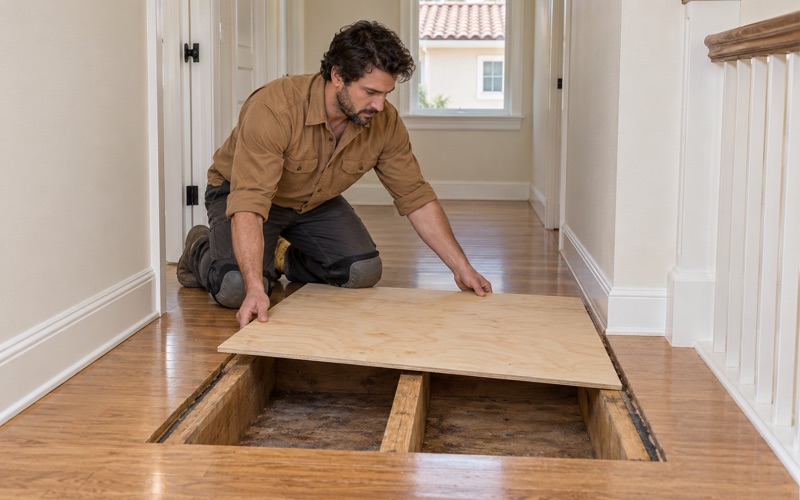
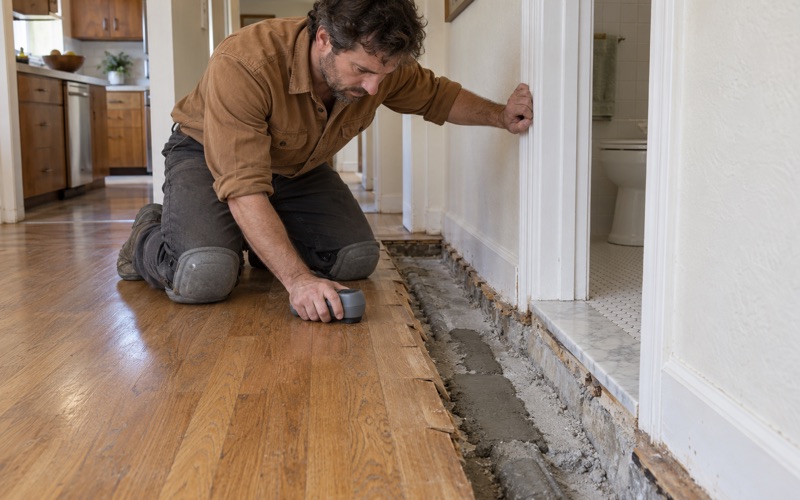
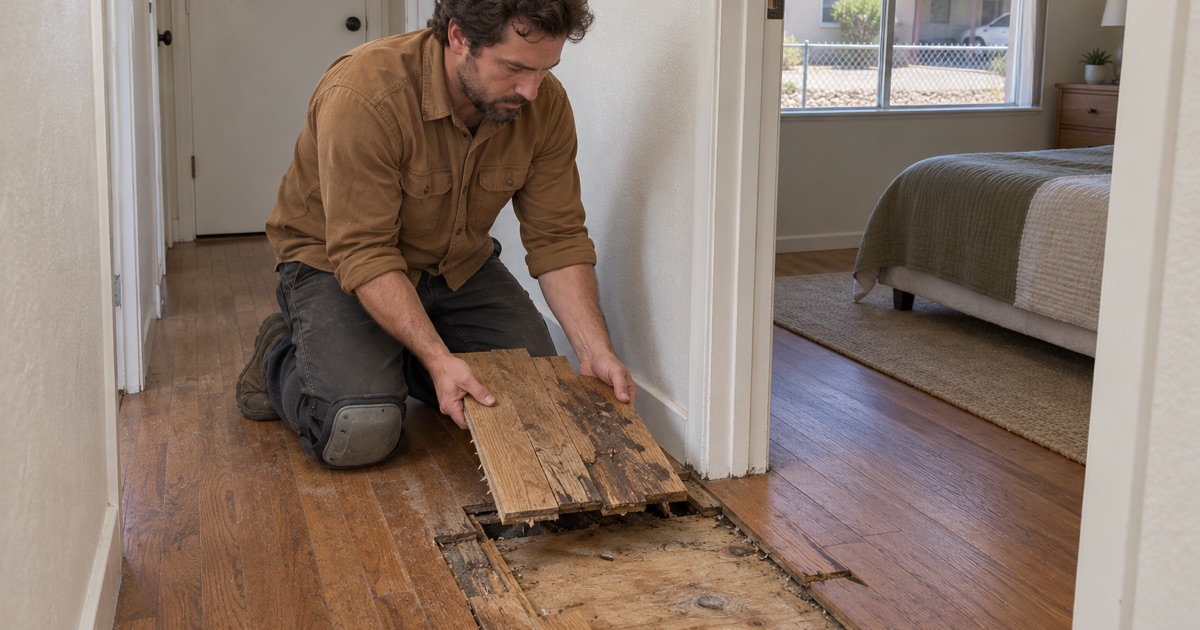
Soft spots near toilets, tubs and exterior doors are traced to the subfloor before we price a finish floor. A board that gives underfoot may be a loose finish layer, or it may be plywood subfloor that has been wet for years. Pricing only what shows on top is how a job overruns its deadline when the boards come up.
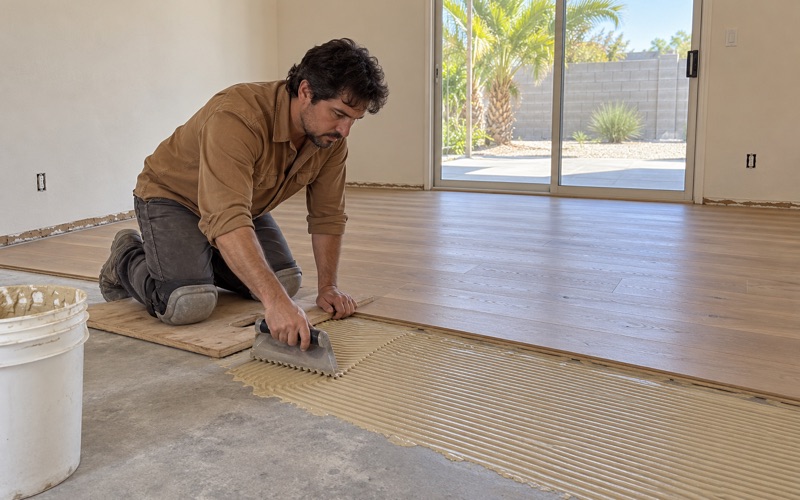
We read moisture content with a wood moisture meter and, where there is concrete under the floor, test it before material is ordered. Readings go into the file with dates. If the source of water is still active, the plumber goes first, because a new floor laid over a live leak will be back on the next notice.
Building a Schedule That Fits the Window
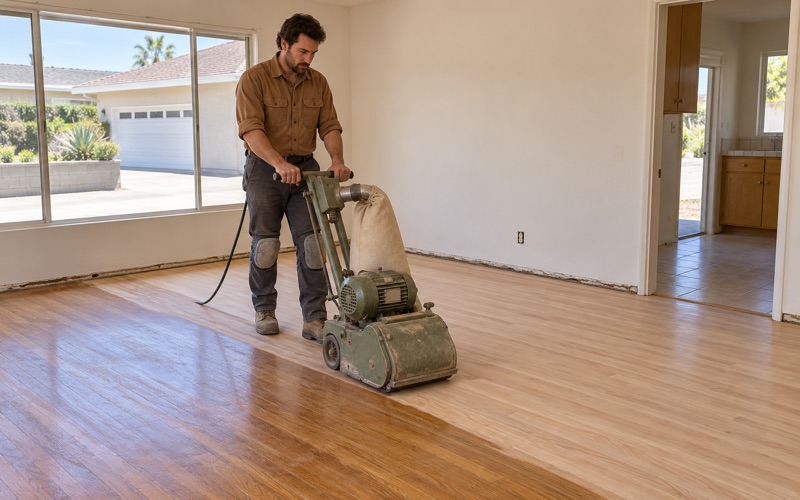
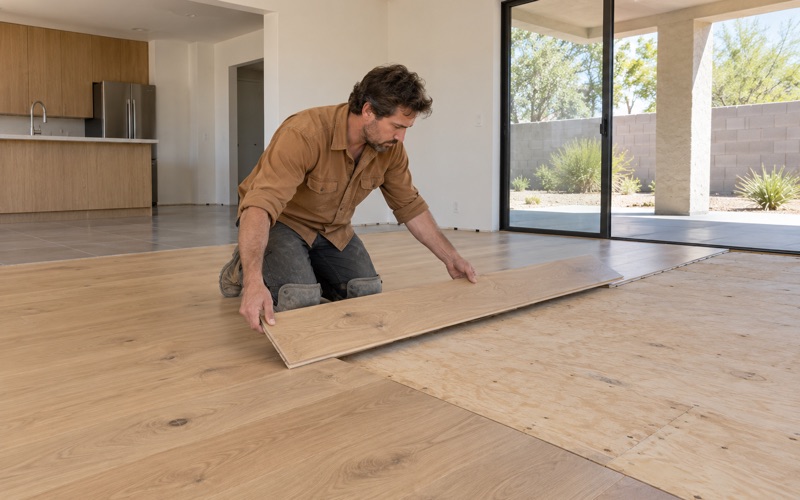
Once the extent is known, we work backward from the compliance date. Material lead time, acclimation, installation, sanding and finish cure all take calendar days, and a site-finished floor needs more of them than a prefinished one. When the window is tight, we say so on day one and show which option fits it.
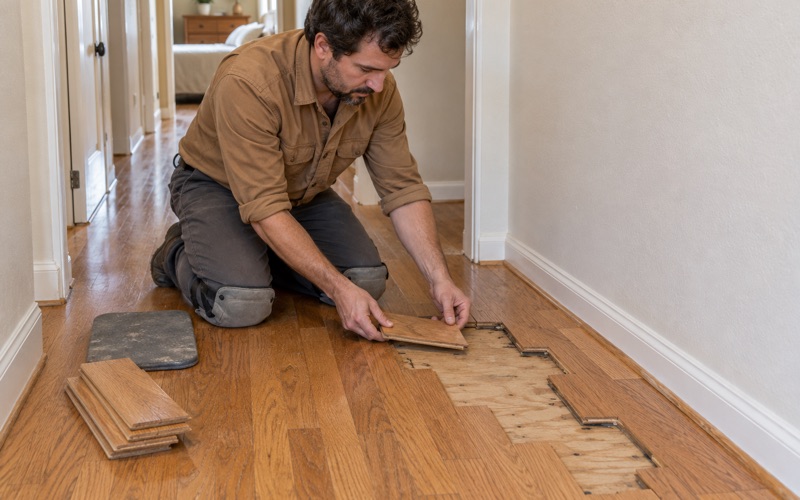
Sometimes the fastest honest answer is a board replacement or weave-in repair rather than a whole room. Other times the subfloor has failed across a doorway and the room has to come up. The written estimate lays out each path with its time and cost, so the owner decides with the deadline in plain view.
Paperwork an Officer and a Tenant Can Follow
Every estimate is itemized: square footage, subfloor repair, stair treads and risers priced separately, transitions and finish. A landlord can hand it to a tenant to explain access dates, and a seller can hand it to a buyer. Photos taken before, during and after the work document what was found under the surface and what replaced it.
We also provide a written cure schedule. It shows when each room can be walked on in socks, when furniture can return, and when rugs can go down. In an occupied rental, that schedule is what lets a household keep living there while the repair is completed.
Floors in Garden Grove’s 1950s and 1960s Houses
Garden Grove incorporated on June 18, 1956, in the middle of a building boom that still shapes its housing. Of the city’s 50,960 housing units, 57.5 percent were built between 1950 and 1969, so most notices we see involve houses and apartments that have had sixty or seventy years of floors laid over each other.
Layers From Several Decades
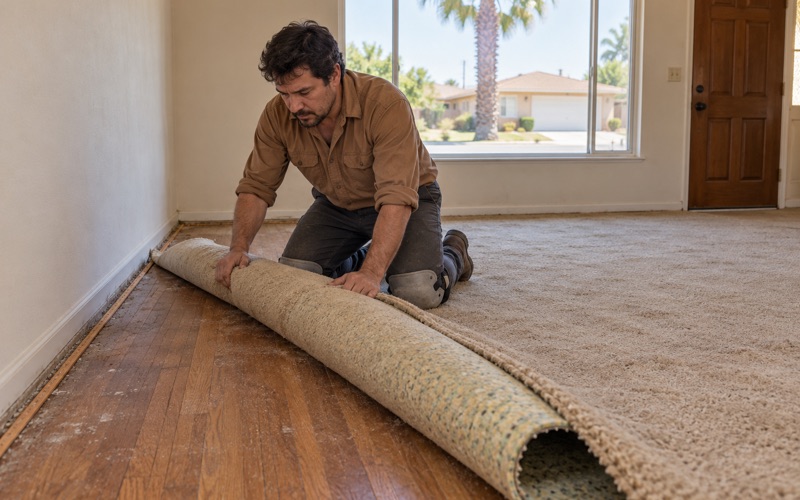
A postwar house has often been recarpeted, retiled and patched by several owners. When carpet comes up, we look at what is underneath board by board before anyone talks about replacement, because strip flooring in fair condition can sometimes be repaired and refinished faster than new material can be delivered and acclimated.
Older resilient tile and the black mastic under it are treated as a possible asbestos question before anything is scraped or sanded. Old parquet gets the same care with its adhesive. Where a survey is needed, it happens first, and it goes into the schedule so the compliance date accounts for it rather than being surprised by it.
Lead-Safe Practices on Pre-1978 Homes
About 77.4 percent of Garden Grove’s housing units predate 1980, and most of the city’s homes were built well before 1978. We follow lead-safe work practices under the EPA Renovation, Repair and Painting rule on those homes, which matters when sanding near painted baseboards, shoe molding and door casings.
Containment and cleanup add time, and we build that time into the schedule from the start. A repair that finishes on schedule but leaves dust behind in an occupied unit only trades one problem for another.
Rentals Make Up Nearly Half the City
Of Garden Grove’s 49,122 occupied units, 23,049 households, or 46.9 percent, rent. That means many notices land on a landlord who does not live in the unit and on a tenant who does. Coordinating access, keeping one bedroom usable, and finishing a room at a time are ordinary parts of how we plan a rental floor repair.
For owner-occupants, 79.1 percent of owner households live in detached houses. Those jobs usually allow more flexibility with room sequencing, but the same moisture readings, subfloor checks and written schedules apply to every property we work on.
Closing Out the Case With a Finished Floor
The goal is a floor that is complete, cured and clean when the officer returns, not one that is still under masking tape. We plan the last day of work with a margin before the inspection date so that a delayed delivery or a humid week does not push the finish past the deadline.
Finishes That Cure on Time
We choose finishes that are legal to apply in the South Coast air basin, where SCAQMD Rule 1113 sets a 275 g/L VOC limit for wood coatings. Waterborne polyurethane generally allows faster recoats and shorter cure times than oil-modified products, which often makes it the practical choice when a compliance date is close.
Sheen level, stain color and the number of coats all affect the schedule. When a tight deadline limits the options, we explain the tradeoffs in writing, and the owner can always add a refinish or a color change later once the case is closed.
Stairs, Transitions and the Details an Officer Sees
Loose stair treads, worn nosings and lifted reducer strips are small items that can delay a finished job. We price stairs per tread and riser rather than folding them into a square-foot number, and we set T-molding and reducer strips at doorways so the new floor meets the adjoining rooms cleanly.
Shoe molding goes back on, gaps are closed, and the room is swept and cleared of tools. The finished photo set shows every repaired area next to its before photo, giving the owner a simple record to point to on the follow-up visit.
When the Water Came From a Claim
Some Garden Grove notices follow a leak that was also an insurance claim. In those cases the floor is rebuilt only after drying is complete, and our moisture readings and photos are organized so an adjuster can follow them. The same file serves the owner, the adjuster and the officer.
If the city’s Neighborhood Improvement Division is involved, it can be reached at (714) 741-5140. We handle the floor. Questions about the notice itself, the deadline or what the officer expects belong with the city, and we encourage owners to ask them early.
Starting Before the Clock Runs Short
The best time to call is the week the notice arrives, not the week before it expires. That leaves room for a moisture test, an asbestos survey if one is needed, material acclimation and a proper cure, which together decide whether the case closes on the first re-inspection or the second.
- 20+ Years in Wood Flooring
- Itemized Written Estimates
- Lead-Safe Sanding