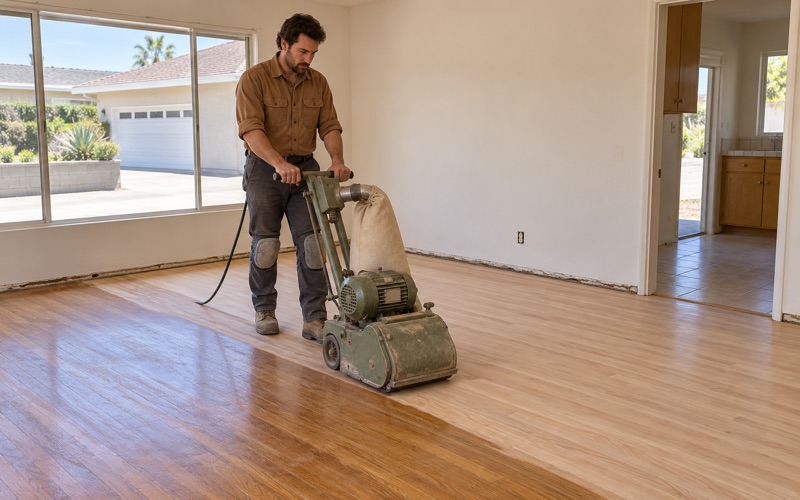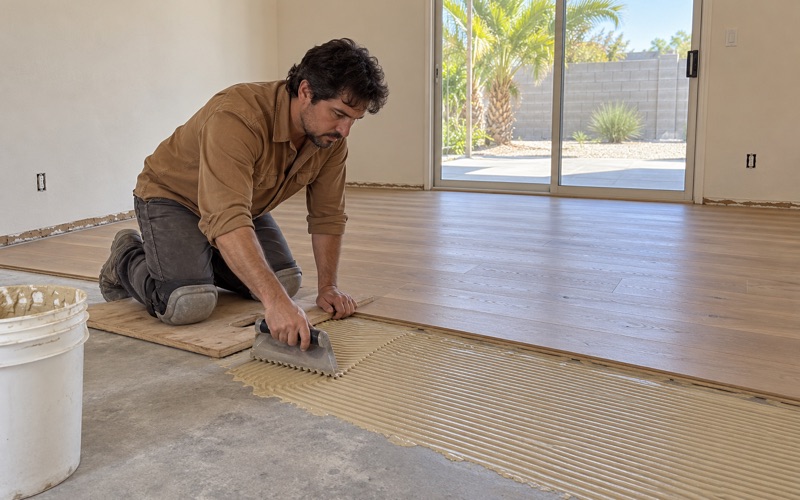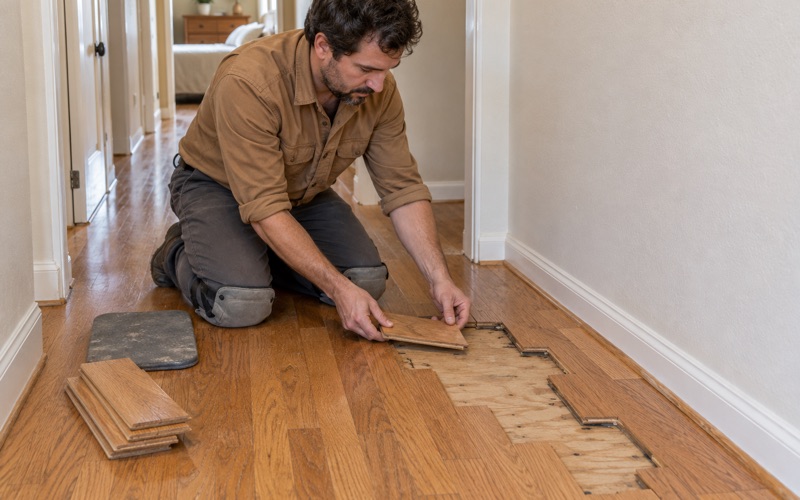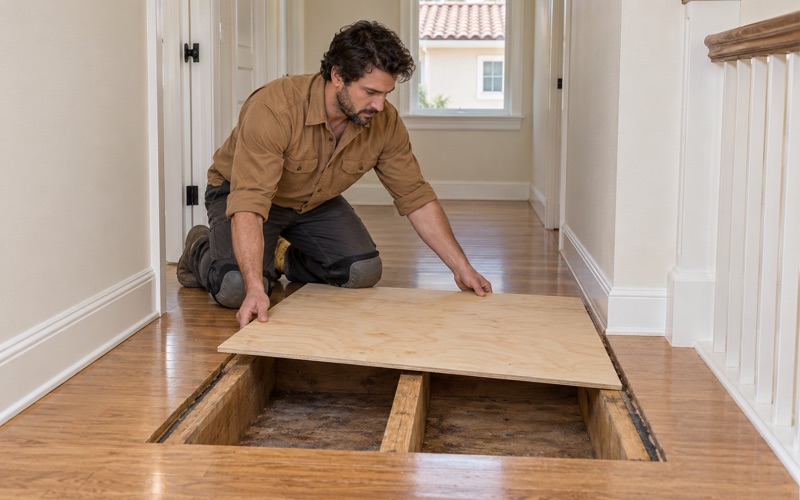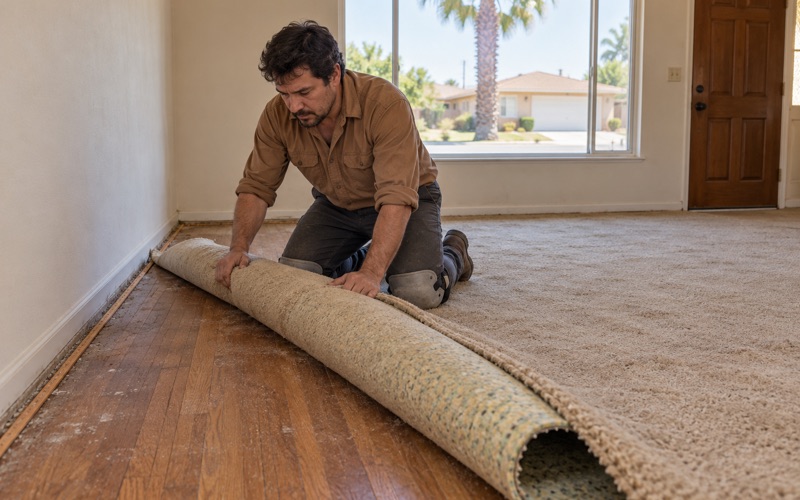
Buena Park Wood Flooring takes on wood-flooring in La Habra Heights one house at a time, drawing on more than 20 years of sanding, repair and installation work. We refinish tired boards, rebuild water-damaged rooms, restore old parquet and lay new hardwood, and every job starts with the floor that is actually there rather than a square-foot price quoted over the phone.
That approach matters most where houses rarely repeat. Before we suggest a species, a finish or a replacement, we measure moisture content in the wood, check the subfloor for soft spots, and write down what we find. Those readings go into a written, itemized estimate, so an owner, a buyer or an insurance adjuster can see exactly what we plan and why.
When the work is done, you also get a written cure schedule that says when each room can take foot traffic and when furniture can go back. It helps any household planning to stay home through the job keep daily life moving around the rooms we are finishing.
From Avocado Ranches to Estate Hillsides
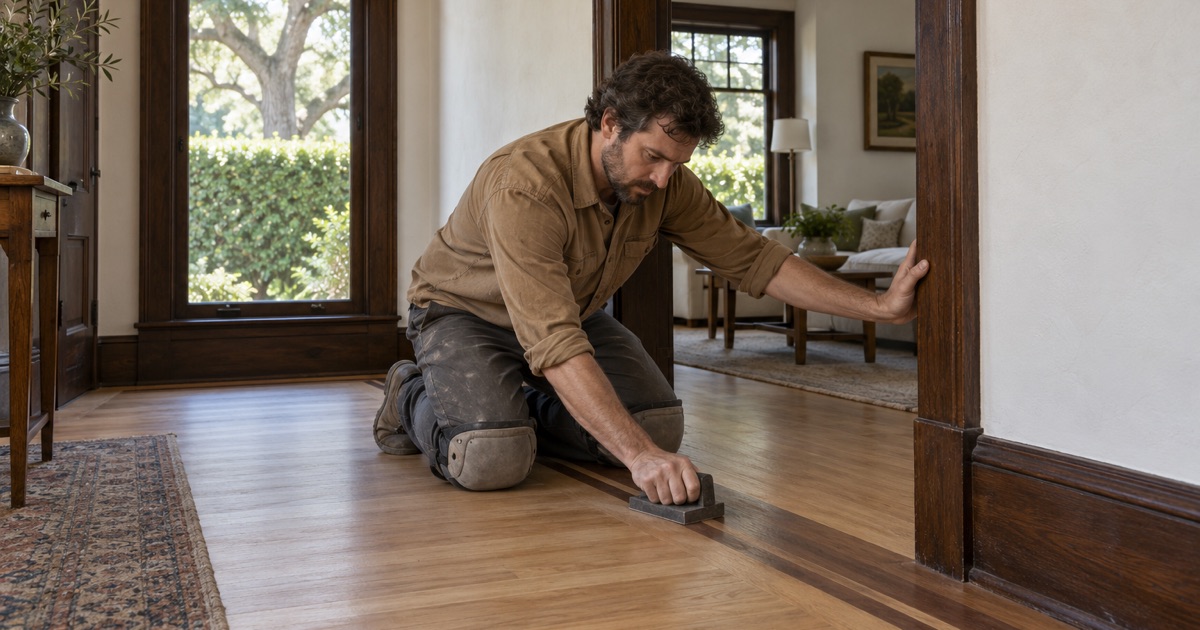
The residential story of the Heights starts with water and fruit trees rather than subdivisions. Understanding that history helps explain why the houses we work in here differ so much from one another, and why we never assume one floor tells us about the next.
Water, Parcels and the Second Beverly Hills
According to the city’s own history, water reached the Heights in quantity in 1921, when the reservoir at Hacienda and East Road was completed. Edwin G. Hart, president of the water company from 1919 to 1939, marketed parcels of five acres and larger, often with contracts to plant avocados on them.
By 1926 a Hart real estate brochure was calling the hills The Second Beverly Hills, noting that the area was already dotted with numerous suburban homes. The avocado heritage stayed on the street map, too: several roads carry the names of avocado varieties, including Chota, Dorothea, Popenoe, Sharpless and Nabal.
The Individually Designed Homes of the Late 1920s
The city’s history names a group of individually designed homes from the late 1920s and early 1930s. It lists houses for Herman Smith and Joy Richart on West Road; the Axelson, Alden Kerfoot and Demo Harshbarger homes on Avocado Crest; Weisel and Beckwith on Fullerton Road; and the Hart, Laura Scudder and Allen houses on Reposado.
That history does not describe what floors those houses were given, and we do not guess. What it does establish is the pattern that still shapes our work here: each house designed on its own, for its own owner, on its own piece of former ranch land. Census figures count 284 of the city’s housing units as built in 1939 or earlier.
Why the Age Spread Matters on a Floor Job
The Heights did not fill in all at once. No single building decade holds more than 17.3 percent of the housing units, so the stock runs from those prewar houses through steady building in every decade since. A floor in one canyon may be decades older or newer than the floor on the next lot.
Age changes the work in practical ways. An older floor may already have been sanded several times, so we check how much wood remains above the tongue before committing to a full sand. A later addition may carry a different species or board width than the original rooms, and the transition between them needs a plan of its own.
Looking for wood-flooring closer to Signal Hill? See Wood-Flooring in Signal Hill.
Every House Built on Its Own Parcel
Zoning kept the ranch-parcel pattern in place. A 1949 County ordinance set one-acre RA-1 zoning in the Heights, and the city that incorporated on December 4, 1978 kept that large-lot character. Among homeowners, 97.0 percent live in detached houses, so nearly every job we quote here is a standalone house rather than a unit sharing floors and walls.
No Two Floor Plans Alike
On a tract street, the second house on a block often confirms what we learned in the first. That shortcut does not exist here. Room layouts, hallway runs, stair locations and the number of floor levels vary from house to house, so we measure every room ourselves and sketch the layout before we estimate footage or board direction.
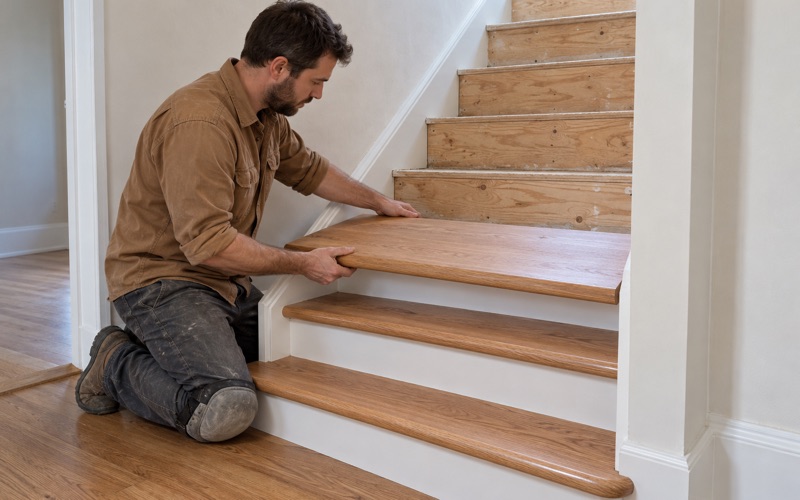
Stairs are priced separately, per tread and riser, rather than buried in a square-foot figure. Custom houses often have stairs that differ in width, stair nosing detail and tread count, and a per-piece price lets you see exactly what that part of the job costs on its own.
Rooms Added Over the Decades
A house on an acre or more has room to grow, and many have grown. Additions, enclosed porches and converted spaces can sit beside the original rooms with different subfloors, different heights and different flooring layered on top. We look underneath at a closet corner or threshold rather than assuming one construction method runs through the whole house.
Where old and new rooms meet, we plan the reducer strip, T-molding or weave-in repair so the change reads as intentional. If the goal is one continuous floor through an addition, we tell you in writing what has to change underneath to make that possible, and what it adds to the price.
Getting Material Up the Hill
The Heights has no sidewalks, and the city describes its roads as narrow and winding. Deliveries of hardwood bundles, sanders and dust collection equipment are planned around that, with a staging spot agreed before the first truck arrives so the material stays dry, shaded and out of the way of your own vehicles.
Floors in a One-of-a-Kind Hillside Home
A custom house deserves a floor plan built for it, not borrowed from the last job. That starts with reading what is already down, measuring the conditions the new wood will live in, and matching the material to how the rooms are actually used.
Reading the Existing Floor First
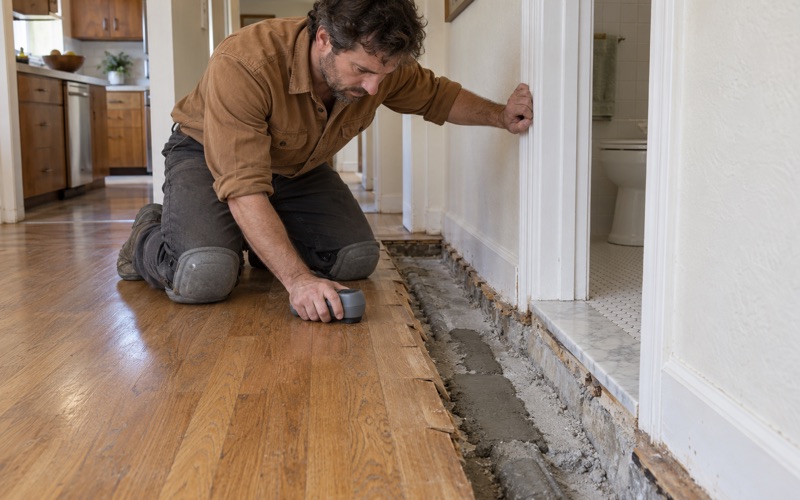
When a house has been carpeted for years, we pull back a corner and look before anyone talks about replacement. Hardwood hidden under carpet tack strip and staples can often be sanded and refinished, and we check each board for cupping, gaps, termite frass and old water staining before we give an opinion.
Old parquet gets the same patience. We would rather patch, restore or lighten a parquet floor than tear it out by default, but the adhesive underneath is treated as a possible asbestos question first. Black mastic and similar parquet adhesive stay undisturbed until an asbestos survey answers that question.
Moisture, Measured Instead of Assumed
The National Weather Service places La Habra Heights in its Los Angeles County San Gabriel Valley forecast zone, handled from its Los Angeles/Oxnard office. A forecast is useful background, but we do not make flooring decisions from one. The wood itself tells us more than any weather report can.
We measure moisture content in the existing floor and in the new boards with a wood moisture meter, let new material go through acclimation inside the house, and follow NWFA installation guidelines on the allowable difference between wood and subfloor. Where a room sits over concrete, we test that too, using an ASTM F2170 in-situ relative humidity test or a calcium chloride moisture test.
Choosing a Species for a Custom House
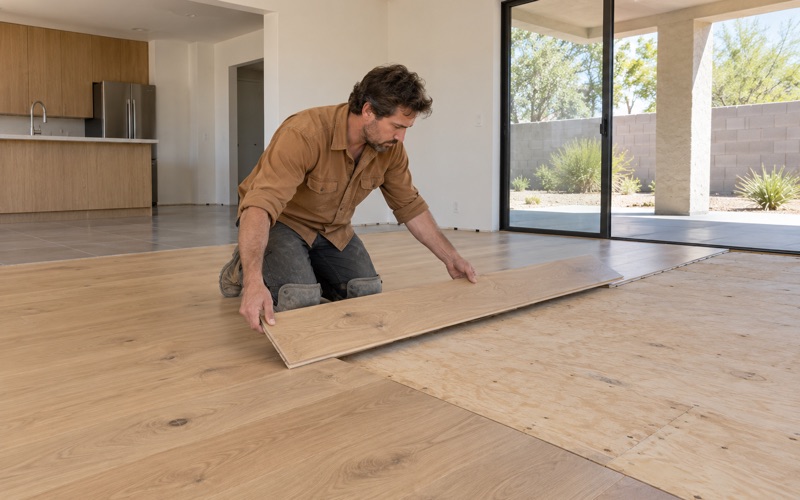
A house designed without a template invites custom choices. White oak and red oak remain the practical workhorses, while hickory and maple rate harder on the Janka hardness rating. Wide plank, herringbone pattern or chevron pattern layouts can suit a room drawn for one owner, and we talk through how each handles sunlight, pets and foot traffic.
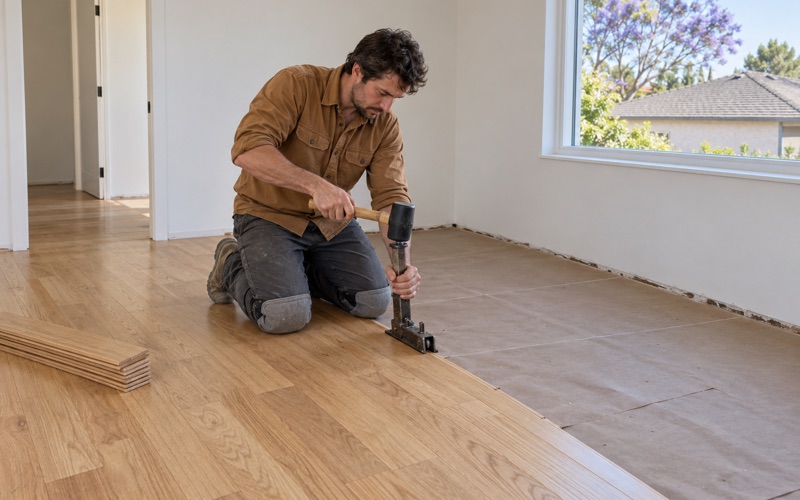
We also explain the choice between site-finished hardwood and prefinished hardwood, and between solid boards and engineered core construction. For engineered flooring, wear layer thickness decides how many future sandings the floor can take, so we put that figure in the estimate rather than leaving it in the fine print.
Caring for Floors on the Old Ranch Lots
A good floor in a house like these should last for decades with the right finish and the right upkeep. The choices below are the ones that most often decide whether a floor ages well or needs another full sand sooner than it should.
Finishes Chosen for the South Coast Air Basin
La Habra Heights sits within the South Coast Air Quality Management District, and SCAQMD Rule 1113 caps wood coatings at a VOC limit of 275 g/L. We choose only finishes that are legal to apply under that limit, whether that means a waterborne polyurethane, a compliant oil-modified polyurethane or a hardwax oil finish.
Sheen level is a separate decision from finish chemistry. Satin and matte hide scratches and tracked-in dust better in rooms that open to the outdoors, while higher sheens show every mark. When the choice is close, we finish sample boards so you can see them in your own light before we commit.
Lead-Safe Work in Older Houses
Census figures place 39.6 percent of the city’s housing units before 1960, well inside the range of pre-1978 housing. Painted baseboards, shoe molding and door casings from that era can carry lead paint, so we follow the EPA Renovation Repair and Painting rule and lead-safe work practices whenever our work disturbs painted trim.
Our sanding runs through a dustless sanding system connected to the drum sander, edger and orbital sander, which keeps most dust out of the air to begin with. Containment, cleanup and the order we move through the rooms are written into the plan before the first board is touched.
Upkeep Between Refinishes
Most floors do not need a full sand every time they look worn. A screen and recoat can refresh a finish that is dull but intact, adding a new coat without taking the floor down to bare wood. We tell you honestly whether a recoat will bond, or whether peeling polyurethane from an earlier product means sanding is the only fix.
Soft spots near a tub, toilet or exterior door are traced to the subfloor before we price a finish floor over them. And when a leak has soaked a room, we rebuild only after drying, documenting the work with photos and moisture readings an insurance adjuster can use.
- 20+ Years in Wood Flooring
- Itemized Written Estimates
- Lead-Safe Sanding