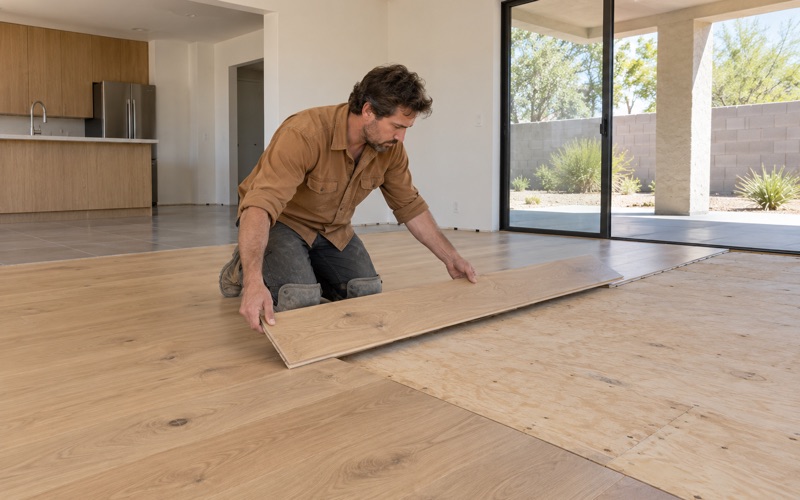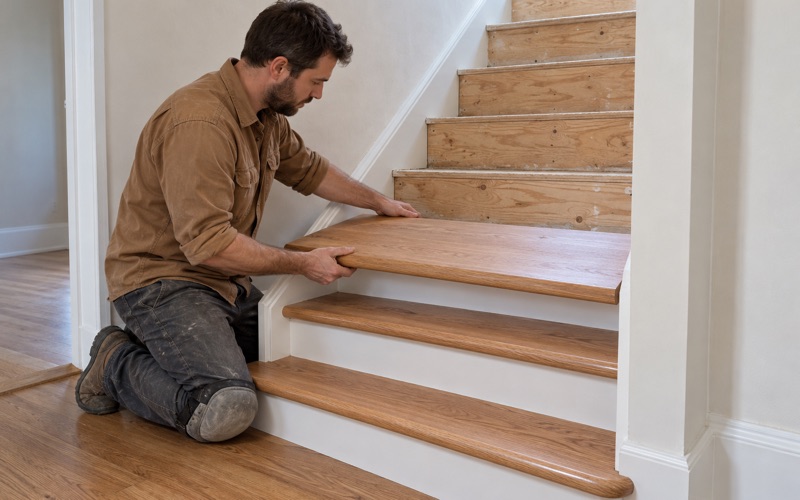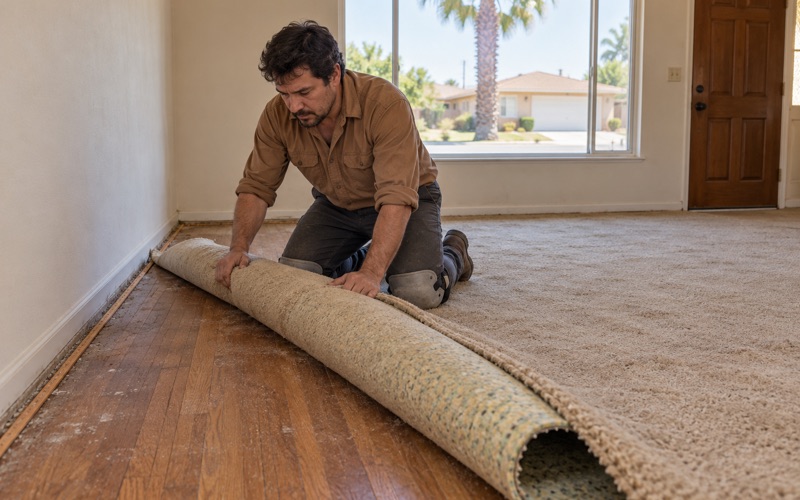
Buena Park Wood Flooring brings more than 20 years to wood-flooring in Laguna Woods, and this page is for one particular client: the owner who rents a manor out. When someone else lives on the floor, the job is planned around a lease date, a tenant’s routine and a housing mutual rather than around the owner’s own calendar.
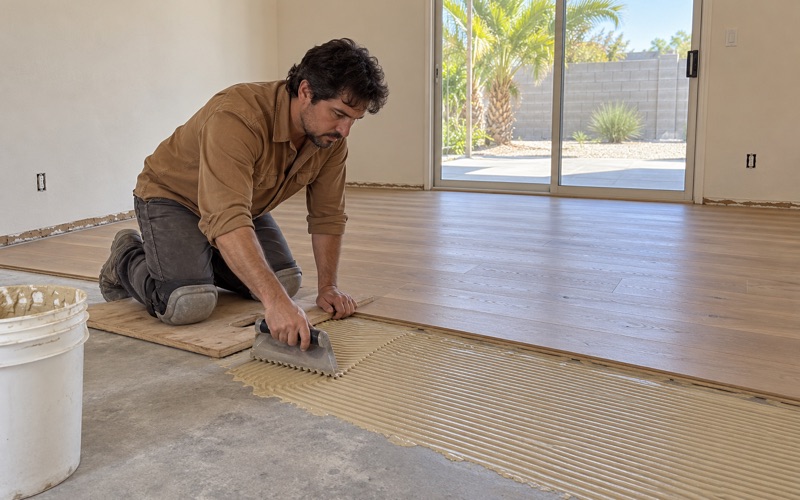
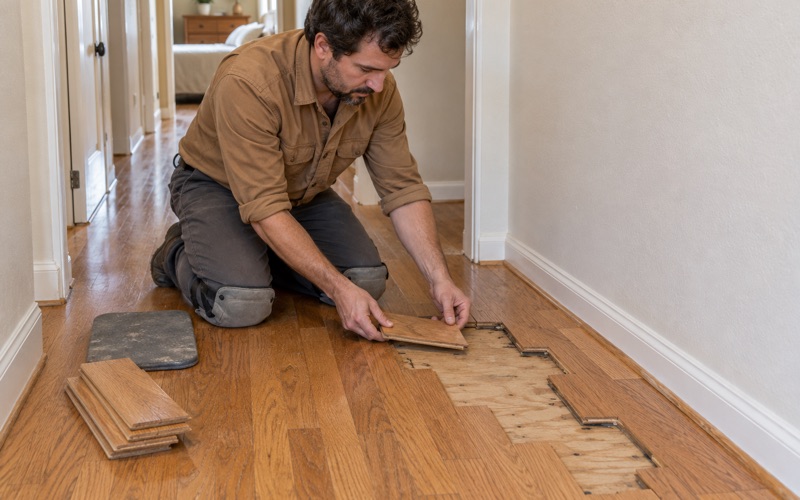
The work itself is familiar. We refinish tired oak, replace damaged boards with weave-in repairs, and install new engineered or solid flooring. What changes for a rented manor is the paperwork around it: who signs, when the rooms are empty, and what the estimate needs to say so a landlord, a tenant or anyone else reading it later can follow it line by line.
Below we walk through how leasing works in the Village, how we fit a floor into the lease year, what stays on the owner’s desk even while a tenant lives there, and how we handle a manor where the member rents out a room and still lives at home.
Rented Manors and How the Mutuals Handle Leasing

Nearly Three in Ten Manors Have a Tenant
Renting is a large part of this city. Census figures for 2024 count 3,319 renter-occupied homes out of 11,706 occupied units, which is 28.4 percent. Roughly ninety percent of Laguna Woods is Laguna Woods Village, the gated retirement community once known as Leisure World, so most of those rentals are manors inside the Village gates.
Those tenancies are mostly recent. Of the 3,319 renter households, 2,953, or 89.0 percent, moved in during 2010 or later. For flooring, that means many rented manors have seen at least one turnover in the last decade or so, and a floor that has carried several short tenancies often shows traffic lanes, furniture dents and a worn finish near the entry.
Third Mutual’s Lease Authorization
Third Laguna Hills Mutual rewrote its leasing policy in Resolution 03-23-78, adopted July 18, 2023 and announced in Information Bulletin 2023-02 on October 2, 2023. Under it, a board-approved lease or rental authorization lasts no more than 12 months. If the lease between owner and tenant runs longer, the owner or resident member applies to renew the authorization every year.
The same resolution keeps leased units under the mutual’s 30 percent rental cap. We mention the cap only because it explains why owners in Third Mutual treat an approved lease as something worth protecting. A floor project that stretches past a planned move-in date is more than an inconvenience when the authorization itself runs on a yearly clock.
United Mutual and Sublease Permits
United Laguna Woods Mutual is a stock cooperative, and it handles renting through sublease permit applications rather than lease authorizations. We don’t speak to United’s leasing limits here, because we have not read them in a primary source. What we plan around is the same practical fact in both mutuals: an approved tenancy with a start date the floor has to respect.
Village leasing specialists process United and Third lease, sublease and room rental applications from the Community Center at 24351 El Toro Road. Those questions go to them, not to us. Our part is making sure the flooring schedule we write for you lines up with the dates on whatever paperwork you are already carrying through that office.
Looking for wood-flooring closer to El Segundo? See El Segundo Wood-Flooring.
Timing Floor Work Around the Lease Year
Between Tenancies Is the Easiest Window
The cleanest time to sand, refinish or replace a floor in a rented manor is the gap between one tenant moving out and the next moving in. Furniture is gone, every room is open at once, and the finish can cure without anyone walking on it. With an authorization that renews every 12 months, owners often know that gap well ahead.
We ask for the move-out and move-in dates at the first visit, then build the schedule backward from the move-in. That leaves room for Mutual Consent, which is the Village’s approval that a proposed alteration meets the mutual’s requirements, and for material delivery. If the gap is short, we tell you plainly which rooms fit inside it and which should wait for the next renewal.
Working With a Tenant in Place
Sometimes a floor cannot wait for a turnover, such as a failed section near the kitchen or a board lifted by a leak. Then the tenant lives through the work, and the Village’s contractor hours shape each day. Noisy work, which includes sanding, runs Monday through Friday from 8 a.m. to 5 p.m. and Saturday from 9 a.m. to 5 p.m.
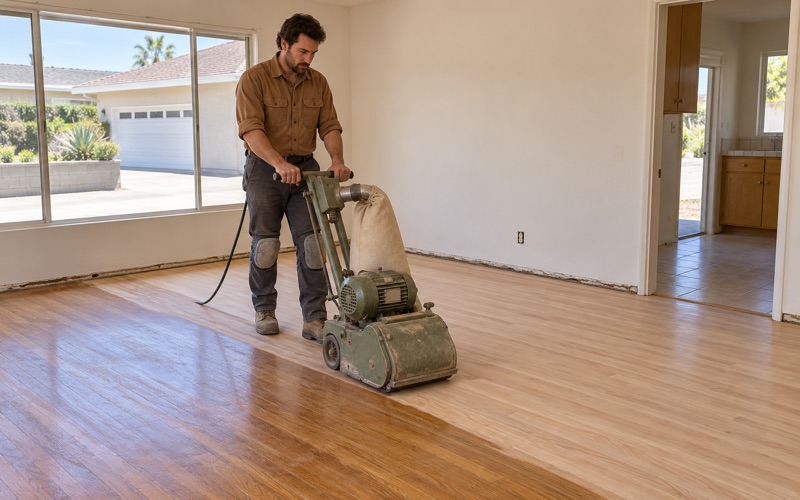
There is no work on Sundays or on the major holidays the Village names. With a tenant at home, we work room by room, keep one clear path to the kitchen and bath, and run a dustless sanding system so the rest of the manor stays livable. Each evening the tenant knows exactly which rooms are open and which are still off limits.
The written cure schedule matters most here. It tells the tenant when a freshly coated room can take socks, when it can take shoes, and when furniture and rugs can go back. We hand the same sheet to the owner, so both sides are working from one set of dates rather than from memory of a conversation.
Moisture, Acclimation and Ordering Ahead
Before material is ordered, we take moisture content readings with a wood moisture meter and write them down. New flooring then acclimates in the manor according to NWFA installation guidelines. In a between-tenancies window, that acclimation time has to be counted, so we fold it into the backward schedule rather than discovering it when the boards arrive.
Finishes are chosen from products that meet the South Coast air basin’s 275 grams per liter limit for wood coatings under SCAQMD Rule 1113. A waterborne polyurethane keeps odor down when a tenant is in place and usually lets rooms come back into use sooner, which is often the deciding factor for a landlord with a move-in date.
What the Owner-Landlord Still Answers For
The Member Deals With the Village
A tenant lives in the manor, but the owner is the member. The Village deals with the member on alterations, so the Mutual Consent application, the contractor paperwork and any questions from the mutual go through you, not through your tenant. We explain this early, because tenants sometimes call us directly about a floor they would like changed.
We are glad to talk to a tenant about access and timing. The decision to change the floor, the approval request and the contract stay with the owner. When a tenant reports a problem, we look at it, photograph it and send the findings to the owner, who decides what happens next and carries it through the Village.
Insurance the Policy Names
Third Mutual’s resolution names two coverages. The lessee or renter must carry renter insurance, an HO4 policy, of no less than $50,000, and the member must carry landlord insurance, an HO6 policy, during the lease or rental period. Those are the policy’s words, and we repeat them only so an owner planning floor work knows both policies exist.
We don’t advise on how either policy responds to a floor. What we provide is documentation: dated photos, moisture readings and an itemized estimate that separates materials, labor, board replacement, stairs priced per tread and riser, and finish. An owner can hand that paper to whoever needs it without us guessing at coverage.
Wear, Damage and the Written Estimate
At move-out, owners often ask whether a scratched or stained floor is normal wear and tear or damage. We don’t decide that question. We describe the floor as we find it: finish worn through in traffic lanes, pet urine stains that have reached the wood, cupping near a water source, or a gouge from a dragged dresser.
That description, with photos, gives the owner something concrete to work from. A screen and recoat, a full sand and refinish, and a board replacement are priced as separate lines, so the owner can see which part of the cost answers to ordinary use and which answers to a specific event.
Room Rentals and Floors in a Shared Manor
When the Member Stays in the Manor
Not every rental is a whole manor. Resolution 03-23-78 brought Third Mutual’s policy in line with Civil Code section 4739, which permits resident members to rent a portion of their own unit for no less than 30 days. A room rental does not count toward the mutual’s 30 percent cap so long as the member continues living in the unit with the renter.
Every household in the Village also follows the senior housing rule under Civil Code section 51.3: at least one occupant of a manor must be 55 or older, and everyone else living there must be at least 45. A manor with a room renter is still one home, with two adults sharing the hallway, the kitchen and every floor between them.
Working Around Two Households Under One Roof
In a shared manor, the renter’s room and the member’s rooms rarely empty at the same time. We usually split the job so the renter’s room is done while they are away for a few days, and the member’s rooms follow separately, each with its own cure schedule so nobody is locked out of the only bathroom.
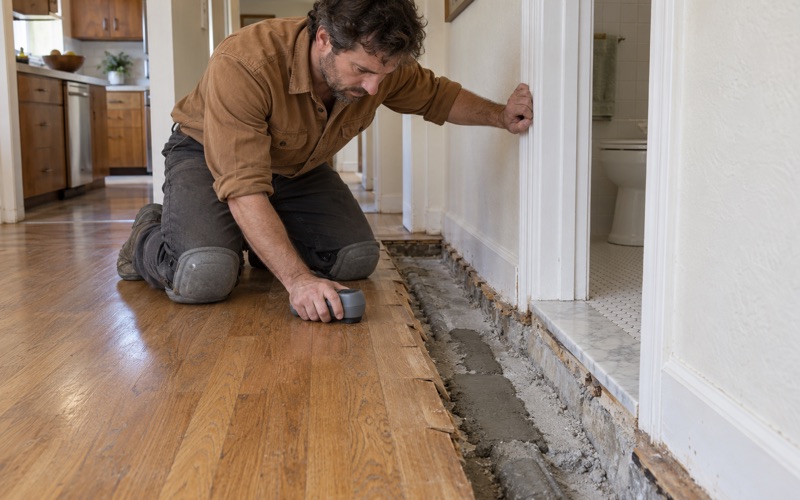
The transitions tie the rooms together. A new reducer strip or T-molding at the renter’s doorway has to meet the hallway floor cleanly, and shoe molding is reset once the finish has cured. We plan the order so the shared hallway is coated last, after both occupants have what they need out of their rooms.
Older Manors, Careful Work
Most of the housing here is from one period: 83.1 percent of the city’s units were built between 1960 and 1979. A manor from that era has had decades of owners and tenants, and the floor we find may sit on top of an older layer that nobody currently living there has seen.
For homes built before 1978 we follow lead-safe work practices under the EPA Renovation, Repair and Painting rule, with containment, cleanup and verification written into the plan. In a rented manor or a shared one, we explain those steps to whoever is living there, so the tenant or room renter knows why a doorway is sealed and when it will open again.
- 20+ Years in Wood Flooring
- Itemized Written Estimates
- Lead-Safe Sanding