Buena Park Wood Flooring has handled wood-flooring in Norwalk for more than 20 years, and in the city’s oldest houses the question we ask first is not which stain to pick. It is what the painted trim around the floor is made of, and whether anyone has looked at it yet. A refinish touches every baseboard, door casing and threshold in a room, so the order of work matters as much as the sanding itself.
This page is for owners of Norwalk homes from the 1940s and early 1950s who are planning floor work and have heard about a free lead paint program for older homes. We explain what that program covers, which houses it reaches, and why we would rather sand after hazard work is finished than before it starts.
Our approach is simple to state. We use lead-safe work practices on every house built before 1978, we write down what we find before we quote, and we sequence the floor around whatever else the house needs rather than asking the house to wait on the floor.
Norwalk’s Free Lead Hazard Program and the Houses It Reaches
What the City Posted
The City of Norwalk has posted a community resource notice about the Lead Free Homes Los Angeles Program, which the county supports. The notice describes a professional home assessment and lead paint hazard removal from inside and outside the home, carried out by contractors the program engages, with inspections along the way. It states that all services are provided at no cost.
The notice also says the program is available in Norwalk for a limited time, and it gives no end date. We are not part of the program and cannot tell a homeowner whether it is still enrolling on a given day. The contact the city lists is 213-302-0876 or LeadFreeHomesLA.com, and that is the place to confirm current status.
Who Qualifies
Eligibility, as the city describes it, rests on two conditions. The home must have been built before 1951, and the household must include a child under age six or a pregnant resident. The notice says immigration or citizenship status is not considered, and it mentions temporary relocation assistance if the work requires a family to leave the house for a period.
For a floor project, that relocation note is worth reading twice. If a household may be out of the house for hazard work anyway, the floor can often be scheduled into or right after that window, so the family moves out once rather than twice.
How Many Norwalk Homes Are That Old
The Census Bureau’s American Community Survey counts 769 Norwalk housing units built in 1939 or earlier and 3,507 built from 1940 through 1949. Together that is 4,276 units, or 15.4 percent of the city’s housing stock, built before 1950. Those are the houses most plainly inside the program’s age line.
The survey groups 1950 with the rest of that decade, so a house finished in 1950 sits in a bin that also holds everything through 1959. That decade is Norwalk’s largest, at 47.0 percent of all units. An owner of an early-1950s house should check the actual build year on the property records rather than assume either way.
Looking for wood-flooring closer to La Habra? See Wood-Flooring in La Habra.
Painted Trim, Baseboards and What Floor Work Disturbs
Where the Paint Actually Is
We do not claim that floor finishes or floorboards in Norwalk contain lead, and no source we have tests them. The program addresses lead paint hazards, and in a room being refinished the painted surfaces sit right at floor level: baseboards, shoe molding, door casings, thresholds, and the bottom edge of door slabs that get planed to clear a new floor.
In a house from the 1940s those surfaces have usually been painted many times. The top coat may be recent, while the layers underneath date to whenever the trim was first finished. What matters to us is what lies under that top coat, and only a test or an assessment answers that.
How Refinishing Touches Trim
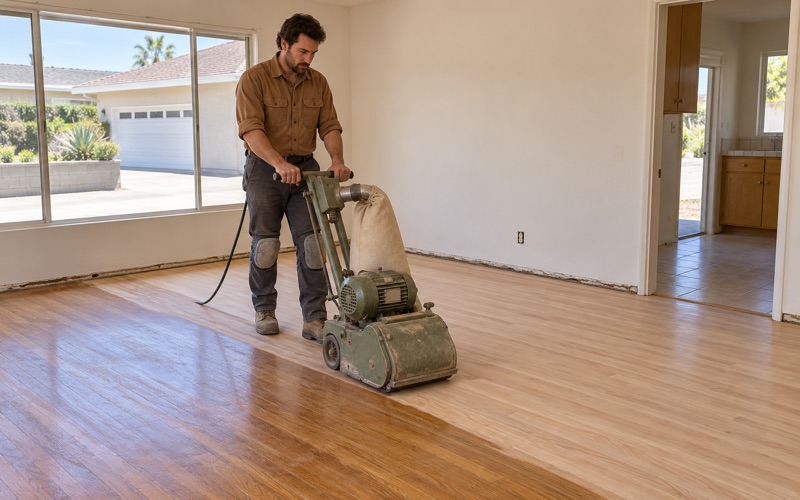
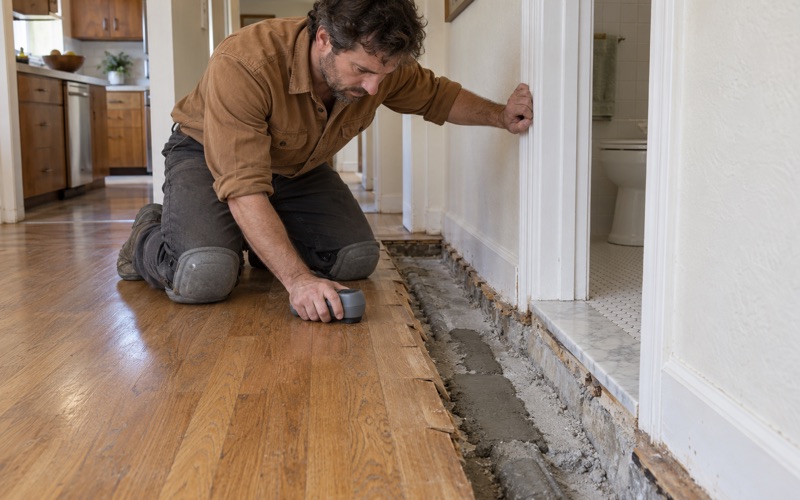
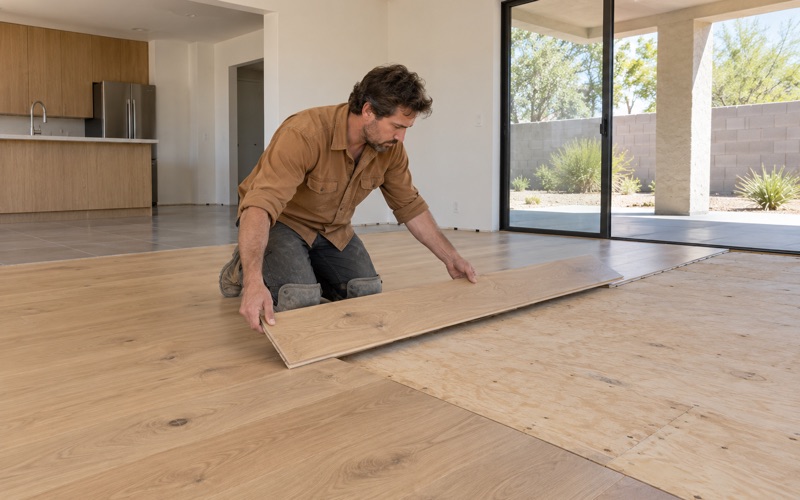
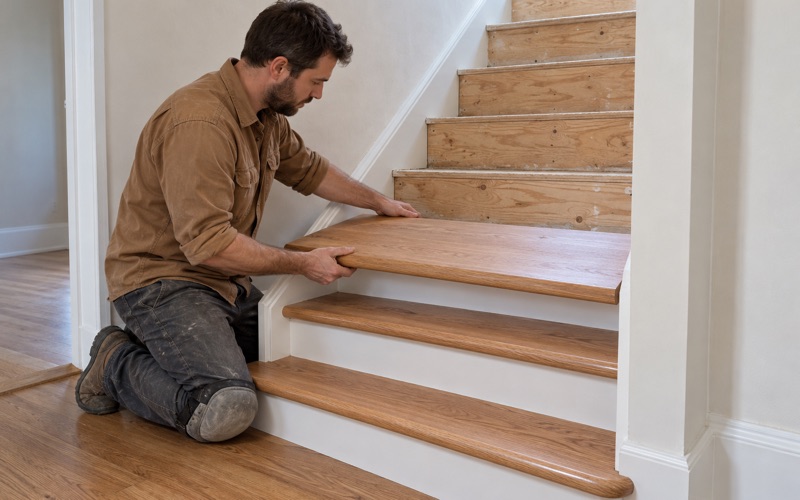
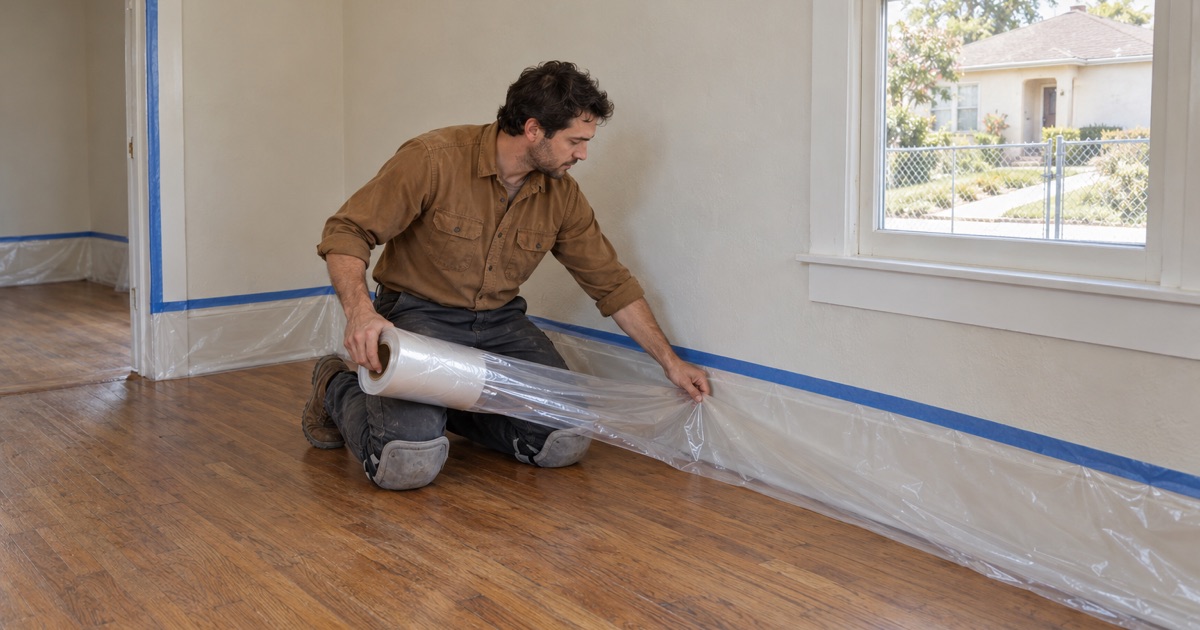
A full sand and refinish puts an edger within a fraction of an inch of every baseboard. Replacing boards or installing a new floor usually means pulling shoe molding and sometimes whole baseboards, and it can mean trimming door casings so new material slides underneath. Each of those steps can abrade, crack or break old paint.
That is why painted trim is part of our scope conversation even on a job the owner thinks of as floors only. We walk the rooms, note which trim will be removed, which will be protected in place, and which doors will need to come off, and we put that list into the written, itemized estimate.
Federal Rules for Pre-1978 Housing
Norwalk’s housing stock is old across the board: 83.5 percent of its units were built before 1980. Federal EPA Renovation, Repair and Painting rules govern renovation that disturbs painted surfaces in pre-1978 housing, including containment, cleanup and cleaning verification. Those rules apply to the work whether or not a household qualifies for the free program.
For us, that means containment of the work area, sealed doorways where trim is being removed, careful handling of old molding, and a dustless sanding system connected to the edger and drum sander. It also means a cleanup that reaches past the floor itself to sills and the rooms next door.
Doing Hazard Work Before the Floor Work
Why Sequence Matters
If a household qualifies for the program and plans to use it, we recommend letting the hazard assessment and any removal happen first. A freshly sanded and coated floor is the easiest surface in the house to damage, and hazard work inside the home can involve scraping, trim replacement, containment materials taped at floor level and foot traffic from a crew.
Refinishing first and then hosting that work risks scratches, tape marks and debris in a finish that has barely cured. Refinishing afterward means the floor is the last trade in the room, which is where a finish floor belongs in any project.
What We Ask to See Afterward
When hazard work has been done, we ask the homeowner for whatever paperwork the program left: what was assessed, which surfaces were addressed, and whether trim was replaced or treated. That tells us which baseboards and casings we can remove freely and which we should leave alone or protect.
If trim was replaced, the new pieces may need to come off again for a floor installation, so it helps to have that conversation before the hazard work is scheduled. A short call between trades can save pulling brand-new molding a second time.
When the Floor Cannot Wait
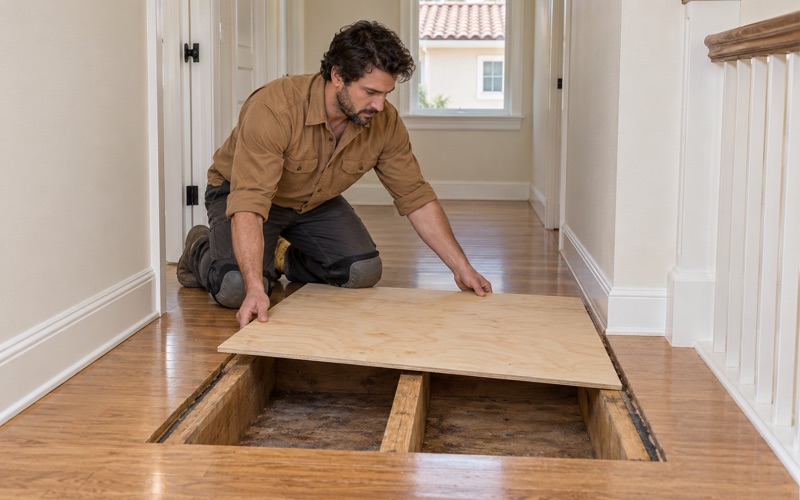
Sometimes the floor has to move first, such as a board failure after a leak or a soft spot near a tub that has reached the subfloor. In that case we keep our work narrow, avoid disturbing painted trim where we can, contain what we must disturb, and document the rooms we worked in so the hazard assessment starts from an accurate picture.
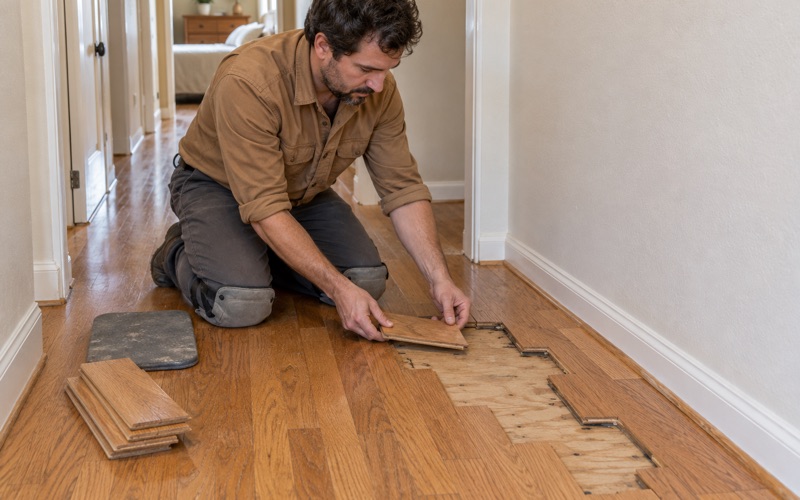
We also tell owners plainly when a small repair now and a full refinish later is the better plan. Patching a few boards with a weave-in repair ahead of hazard work, then sanding the whole room afterward, often costs less than refinishing twice.
Planning a Floor Project in a Pre-1951 Norwalk Home
Assessing What Is Underneath
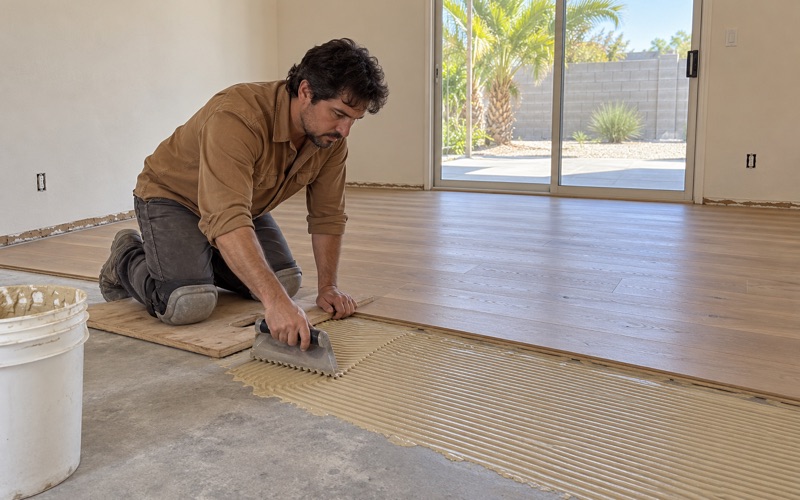
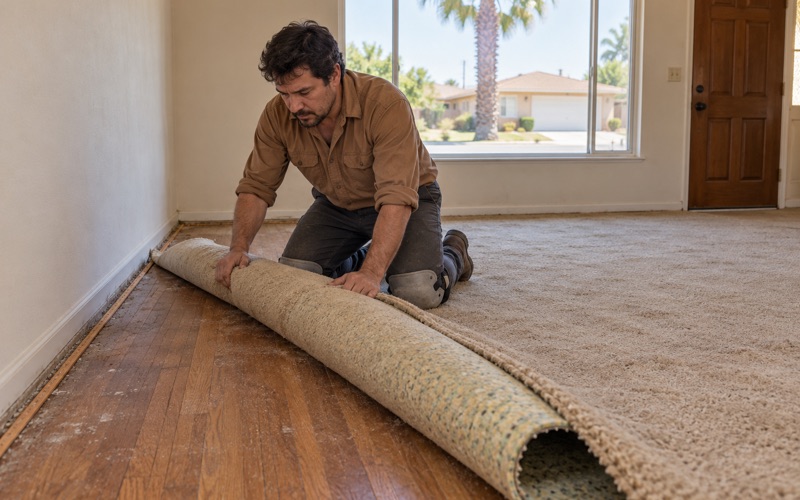
Many Norwalk houses from this era have had carpet, vinyl or tile laid over whatever strip flooring went in first. We do not guess the species or condition from the outside. We lift carpet at a closet or corner, check boards one at a time, measure moisture content with a wood moisture meter, and note staple holes, carpet tack strip damage, gaps, cupping and any termite frass before anyone talks about replacement.
If the covering is old tile, we treat the tile and any black mastic beneath it as an asbestos question first and recommend an asbestos survey before removal. That is a separate issue from lead paint, but in houses this age the two often come up in the same week.
Finishes, Cure Time and a Household at Home
Families with a young child or a pregnant resident usually want low-odor products and a clear idea of when rooms are usable. We choose finishes that are legal to apply in the South Coast air basin under the 275 g/L wood-coating limit in SCAQMD Rule 1113, and waterborne polyurethane is often the practical choice for a household staying in place.
Every job comes with a written cure schedule showing when each room can take socks, then shoes, then furniture and rugs. In a small 1940s house with few rooms to spare, that schedule decides where everyone sleeps, so we plan the order of rooms with the family rather than around our own convenience.
Who Owns the House and Who Decides
In Norwalk, 68.3 percent of occupied units are owner-occupied, and 91.2 percent of owner households live in detached houses. A search summary of the lead program says eligible properties are limited to four or fewer units, which would include single-family homes. For most owners, the floor decision and the program decision rest with the same person.
For rental houses, our itemized estimates are written so an owner and a tenant household can both read what is planned, room by room. The City of Norwalk, incorporated in 1957, runs its own Building & Safety Division in Community Development, and we check with that office before starting any work that goes beyond the finish floor.
A Practical Order of Work
For a qualifying household, the sequence we suggest runs as follows. Confirm the program’s current status through its listed contact. Let the assessment and any hazard removal happen. Then call us to assess the floor, write up the scope and plan trim removal against what the program left.
For a household that does not qualify, the same logic still holds. Have painted trim tested or assessed before sanding, keep the floor as the last trade in the room, and choose a contractor who will put containment, dust control and cleanup in writing rather than promising them in conversation.
- 20+ Years in Wood Flooring
- Itemized Written Estimates
- Lead-Safe Sanding