Buena Park Wood Flooring brings more than 20 years of work to wood-flooring in Rossmoor, and much of what we do here happens at one of two moments. Either a family that has walked the same boards for decades decides those boards finally deserve attention, or the house passes to someone new. Both call for a careful read of what a long-worn floor can still give.
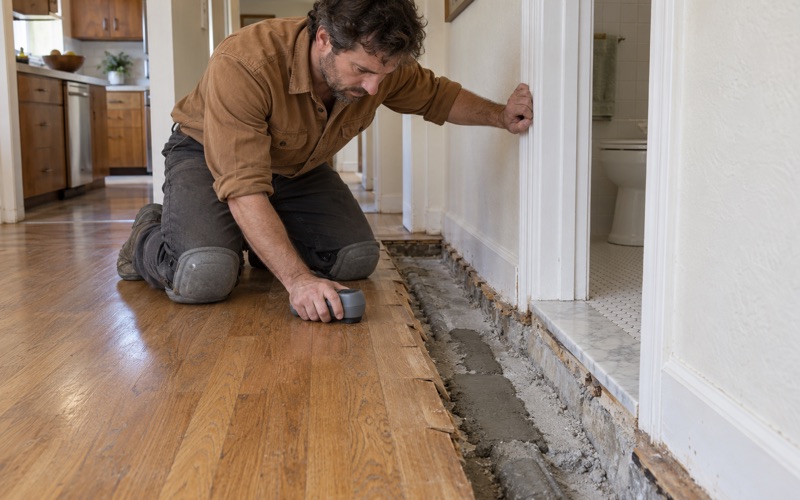
We start with measurement rather than a sales pitch. A wood moisture meter reading goes on paper for each room, worn traffic lanes are checked for how much more sanding they can take, and every estimate is written and itemized. A seller, an heir or a longtime owner can see exactly where the money goes before any work is scheduled.
When a household stays home through the job, we hand over a written cure schedule showing when each room can be walked on again and when furniture can go back. That matters in a house where the same people have lived for thirty years and have nowhere else they would rather sleep.
Owners Who Stayed: Floors After Thirty Years in One Family
Rossmoor is a place where houses stay in the same hands. The 2024 American Community Survey counts 89.8 percent of occupied units as owner-occupied, and 45.8 percent of owner households moved into their house before 2000. More than a quarter, 26.5 percent, moved in during 1989 or earlier. That kind of tenure shapes almost every floor we are asked to look at here.
What Decades of Daily Traffic Do
A floor walked by one family for thirty years wears in a pattern that tells its own story. The path from the kitchen to the back door goes gray and dull, the finish in front of a favorite chair wears through to bare wood, and the strip under the sofa still looks nearly new. Refinishing has to bring all of those zones back to one even color.
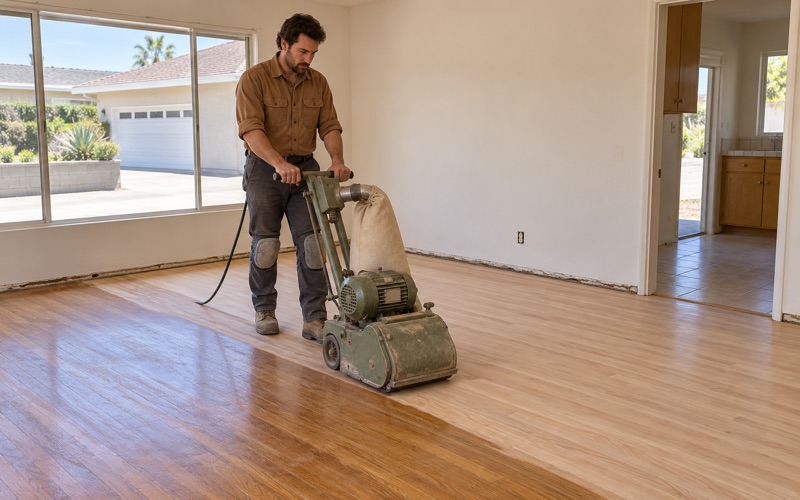
Before we promise that, we check how much wood remains above the tongue. Solid oak strip flooring that has been sanded two or three times already may have little left to give, and engineered boards depend entirely on their wear layer thickness. A floor that cannot take another full sanding may still take a screen and recoat, which renews the finish without cutting into the wood.
Repairs That Piled Up Over the Years
Long ownership also means layers of past fixes. We often find a patch of boards laid after an old leak that never quite matched, a length of shoe molding nailed over a gap, or a doorway where carpet once met wood and a carpet tack strip left a row of holes. Each of these goes into the estimate as its own line.
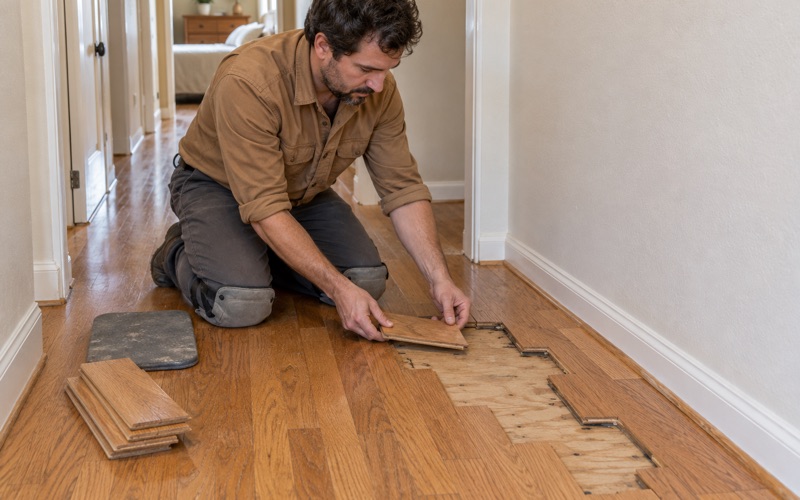
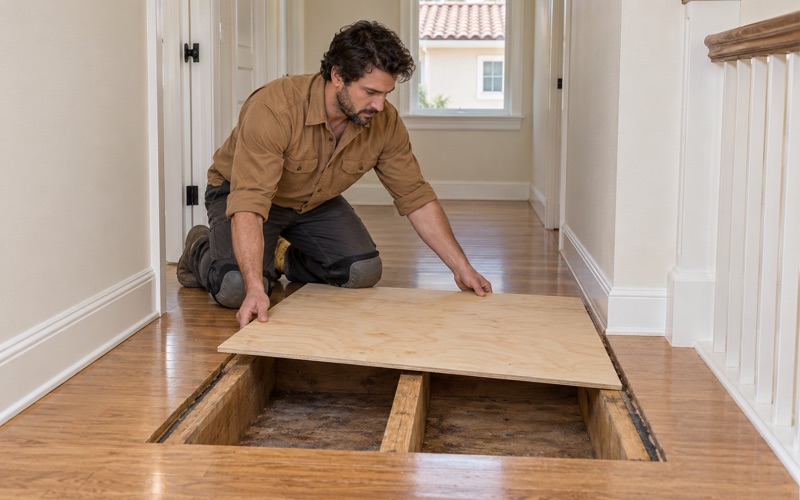
Where boards are damaged, a weave-in repair stitches new pieces into the existing field so the joints stagger naturally instead of ending in a straight seam. Squeaks and soft spots near toilets, tubs and exterior doors are traced down to the subfloor before a finish floor is priced, because refinishing over a failing plywood subfloor only hides the problem for a season.
Owners Planning to Stay On
Many of the owners we meet have no plans to sell. For context, 39.7 percent of owner householders here are 65 or older, and a good share want floors that are simply easier to live on. Smoother transitions, a reducer strip in place of a raised threshold, and a lower sheen level that shows less wear all come up in those conversations.
For these households the question is usually how much disruption a project will cause, not how it will photograph. We often suggest working one wing of the house at a time, so a bedroom and a bathroom stay usable while the living areas are sanded and finished. The written cure schedule then covers each stage separately.
Looking for wood-flooring closer to Lakewood? See Wood-Flooring Services in Lakewood.
When a Rossmoor House Changes Hands
Because so many owners arrived long ago, the handover moment is a big part of floor work in this community. Plenty of newer arrivals are already here: 38.2 percent of owner households moved in during 2010 or later, and every renter household arrived in that same stretch. When a house one family held since the 1980s reaches a new occupant, the floors are usually the first thing reopened.
Preparing a House for Sale
A seller’s floor work is a question of return and timing. We walk the house, separate what needs full sanding from what only needs a recoat, and write an itemized estimate a listing agent can read at a glance. When the schedule is tight, a screen and recoat in lived-in rooms paired with a full refinish in the most visible spaces often fits between cleanout and listing photos.
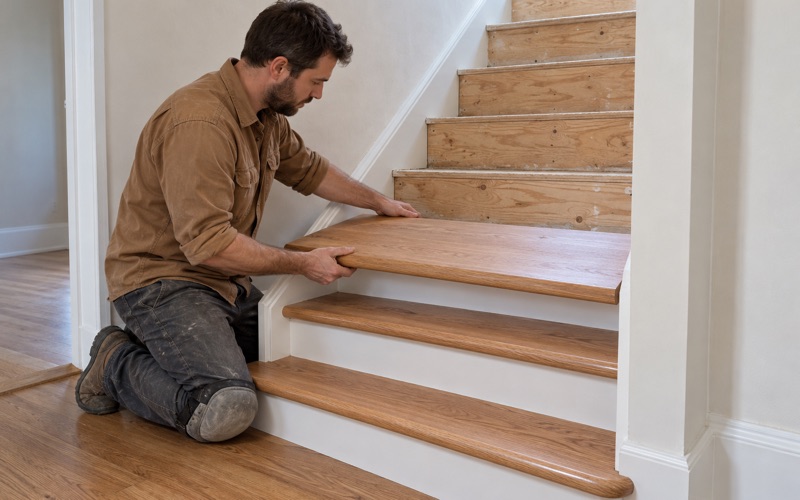
Stairs are priced per tread and riser rather than buried inside a square-foot figure, since a staircase is often the first thing a buyer sees from the entry. Worn stair nosing and loose treads get their own lines, so a seller can decide which items to take on now and which to disclose and leave for the next owner.
After the Keys Change
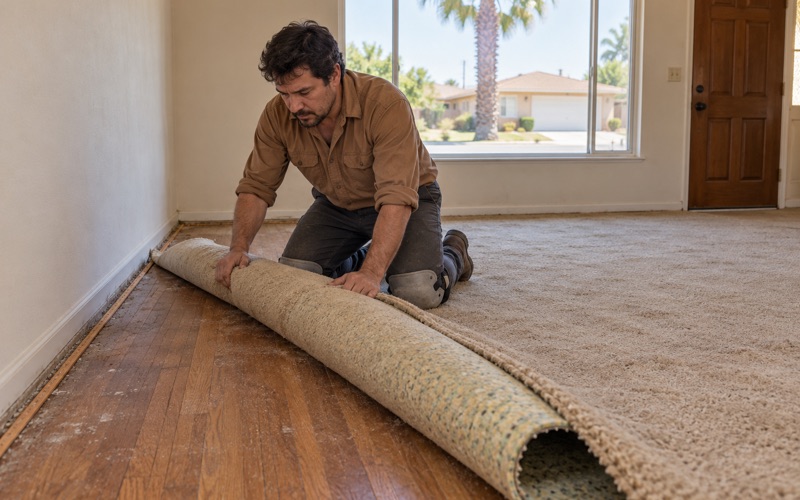
New owners often want old carpet gone before the moving truck arrives. When it comes up, we assess whatever sits underneath board by board, noting staple holes, stains and gaps, before anyone talks about a replacement. Much of what looks ruined under decades of padding sands out, and what does not is replaced with boards matched in species and width.
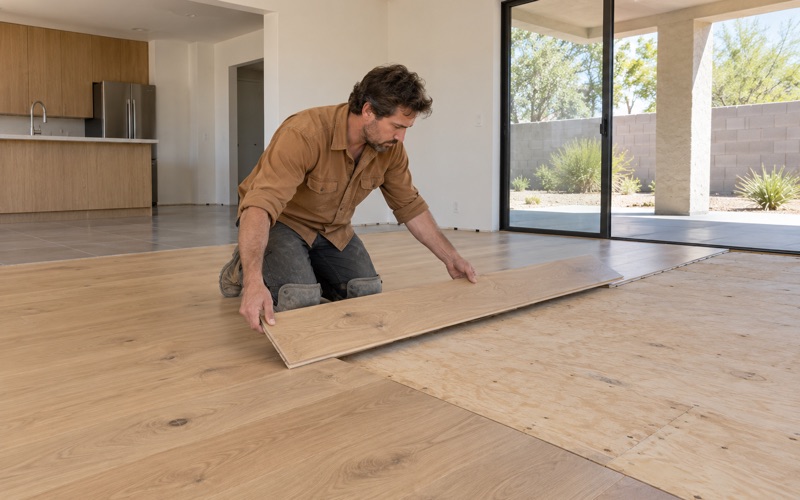
A buyer who plans to change the look entirely has more choices than a seller does. Red oak and white oak take stain differently, a harder species such as hickory or maple ranks higher on the Janka hardness rating for households with large dogs, and wide plank or a herringbone pattern changes how a room reads. We lay out those tradeoffs in writing before anything is ordered.
Inherited Homes and the Move-In Question
Not every Rossmoor house changes hands through a sale. Many pass to children or other heirs, and a state rule that took effect in 2021 has changed how some families think about that transfer. We do not give tax advice, but the rule is worth knowing about because it bears on who ends up living on the floors we refinish.
What Proposition 19 Requires
According to the State Board of Equalization, the parent-child exclusion under Proposition 19 became operative on February 16, 2021. For it to apply, at least one eligible transferee must continually live in the property as their family home. The exclusion covers current taxable value plus an adjusted amount, set at $1,044,586 for February 16, 2025 through February 15, 2027.
Whether a particular family fits that rule, and what it means for their bill, is a question for the county assessor or a tax professional rather than a flooring crew. What we see in practice is simpler. When an heir plans to move in, the floor work stops being staging for a buyer and becomes a decision about a house someone will actually live in.
Planning Work Around an Heir’s Move
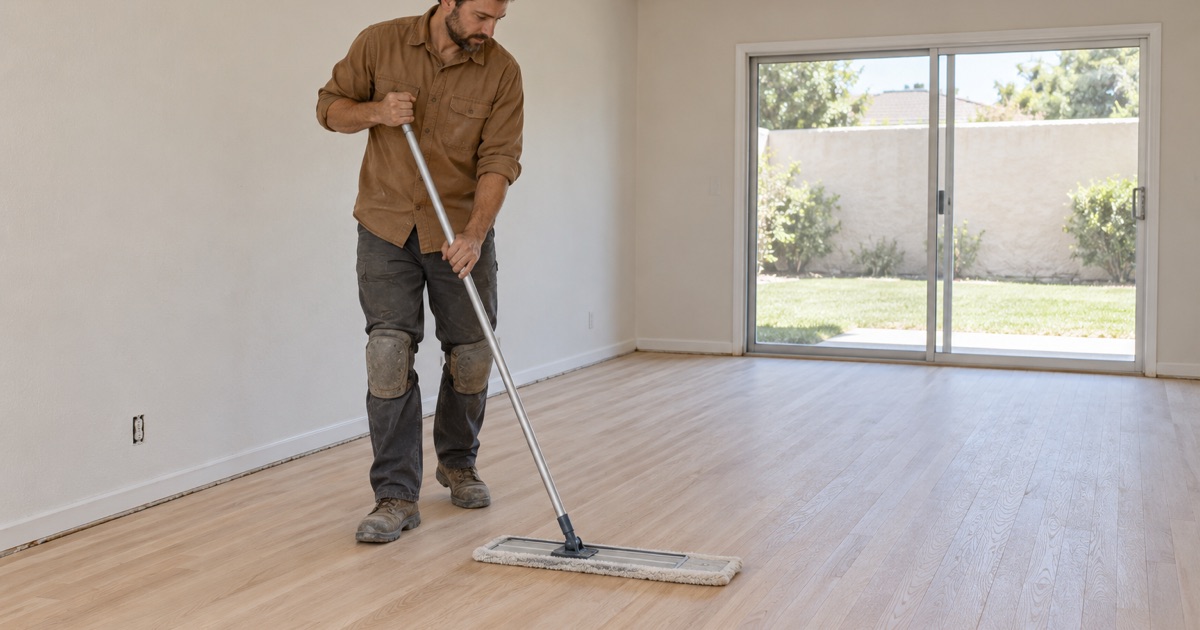
An heir moving into a parent’s house usually wants the floors done before the furniture arrives, and often wants a different look than the one chosen decades earlier. Orange oak toned by years of oil-modified polyurethane can be sanded back and finished in a clearer waterborne polyurethane, or stained toward a gray or natural tone.
Timing matters more in an inherited house than many families expect. Estate belongings often sit in rooms for weeks, so we plan the job in stages, finishing the emptied rooms first and returning for the rest. Each stage gets its own entry on the cure schedule, so nobody carries boxes across a floor that is still curing.
Refreshing Floors for the Next Occupant
The houses behind those long tenures are older than most of their owners. Of Rossmoor’s housing units, 82.0 percent were built from 1950 to 1969, which puts nearly every house here well before 1978. That age shapes both the safety steps we take and what we expect to find once old coverings come up in this unincorporated corner of Orange County.
Old Houses, Careful Removal
On any house built before 1978, we follow lead-safe work practices under the EPA Renovation, Repair and Painting rule, containing dust at doorways and around baseboards and trim that may carry old paint. A dustless sanding system keeps airborne dust down, which matters in a house with painted woodwork dating from the 1950s or 1960s.
Old parquet and resilient tile call for a pause before any scraping. Black mastic and the adhesive under old parquet or a 9x9 asbestos floor tile can contain asbestos, so we treat that as a question for an asbestos survey rather than something to grind off. Parquet in sound condition is often restored, patched or lightened rather than torn out.
Finishes and Moisture Readings
Rossmoor sits in the South Coast Air Quality Management District, so every finish we apply comes from products legal to use under the 275 g/L wood-coating limit in SCAQMD Rule 1113. Waterborne polyurethane and a hardwax oil finish both fit that rule, and each wears differently in a busy kitchen or a hallway.
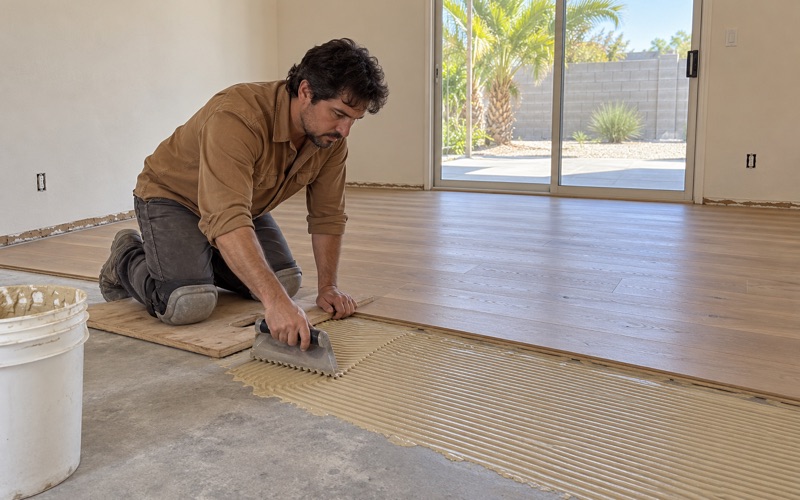
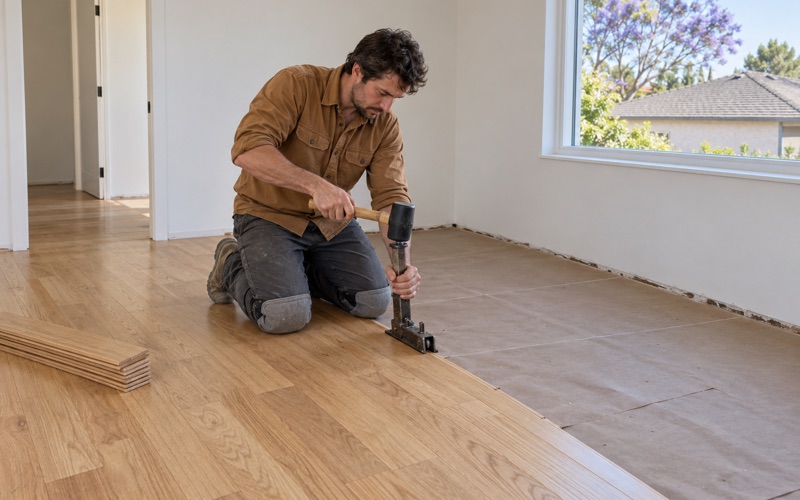
Before new material is ordered, moisture content is measured in the wood and in any concrete the new floor will sit on, and the readings are written down. New boards are given time to acclimate to the house following NWFA installation guidelines, which helps prevent the cupping and board gaps that show up months after a rushed install.
- 20+ Years in Wood Flooring
- Itemized Written Estimates
- Lead-Safe Sanding