Buena Park Wood Flooring has handled wood flooring in South Whittier for more than 20 years, and most of that work happens in houses that are full every day of the week. We sand, refinish, repair and install hardwood in homes where the hallway never empties, the kitchen runs from early morning to late evening, and nobody has a spare week to spend somewhere else.
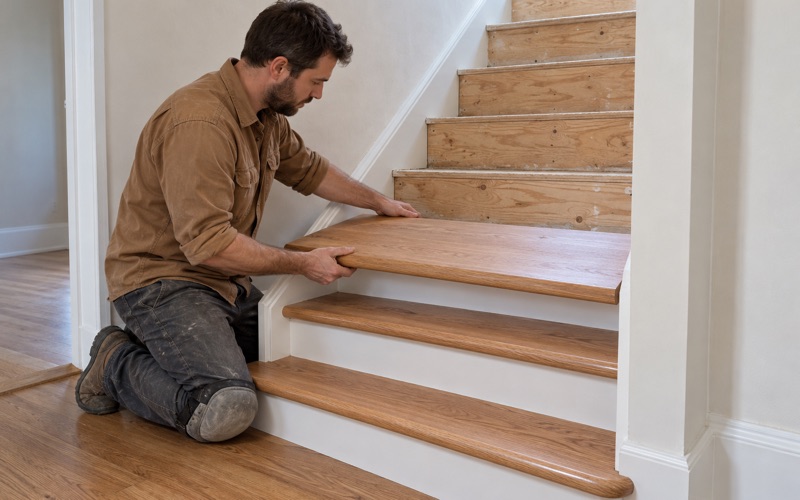
That shapes how we plan a job. Before a price is written, we look at where the traffic actually goes, which rooms can be emptied and for how long, and which finish will still look right after years of steady use. The estimate is itemized and in writing, with each room on its own line and stairs priced per tread and riser.
Every household also gets a written cure schedule. It spells out when each room can take socks, then shoes, then furniture and rugs, so a family staying put through the work knows exactly which doors to keep closed and when the living room comes back.
Big Households in South Whittier’s 1950s Houses
South Whittier is an unincorporated community in Los Angeles County, just south of the city of Whittier, and its housing is overwhelmingly postwar. Of 15,690 housing units, 7,729 were built between 1950 and 1959, which is 49.3 percent of everything standing. Among owner households, 93.9 percent live in a detached house, so most of our work here is in single-family homes from that one decade.
How Many People Share a Floor
The households inside those houses are large. According to the 2024 American Community Survey, 13.4 percent of South Whittier’s occupied units hold more than one person per room, and 26.5 percent of owner households have five or more people. At the top of that range, 766 owner households have seven or more people living under one roof.
The County has written down what that means for buildings. Its 2021-2029 Housing Element, in a countywide passage on aging housing, says large and over-crowded households put additional stresses on structures and systems that were not designed to accommodate large capacities. A wood floor is one of those systems, and in a 1950s house it carries far more footsteps than its builders planned for.
Where the Wear Shows First
In a full house, wear follows the paths people repeat. The strip from the front door to the kitchen, the hallway outside the bathroom and the spot in front of the sink lose their sheen first, while the corners under beds and dressers still look new. That contrast is usually the first thing an owner notices.
Chairs and furniture that move constantly leave their own pattern: fine scratches under the dining table, dents from chair legs, and scuffs along the path to the back door. Grit tracked in from outside acts like sandpaper under shoes. None of it is dramatic damage, but with six or seven people crossing the same boards, it adds up quickly.
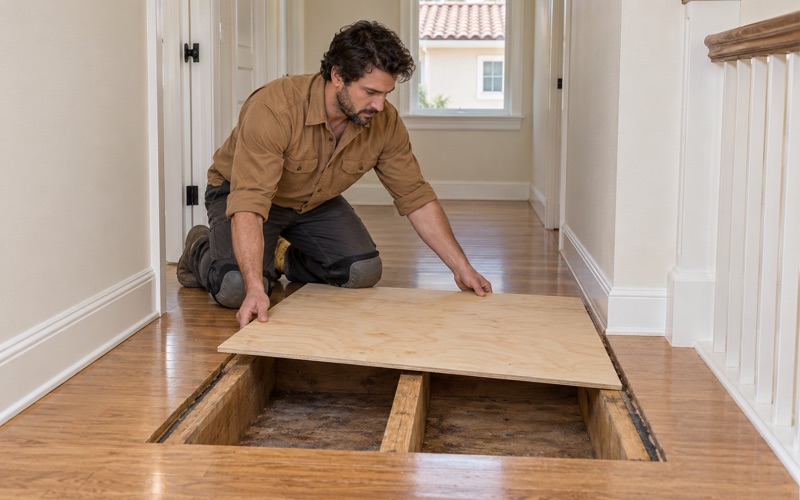
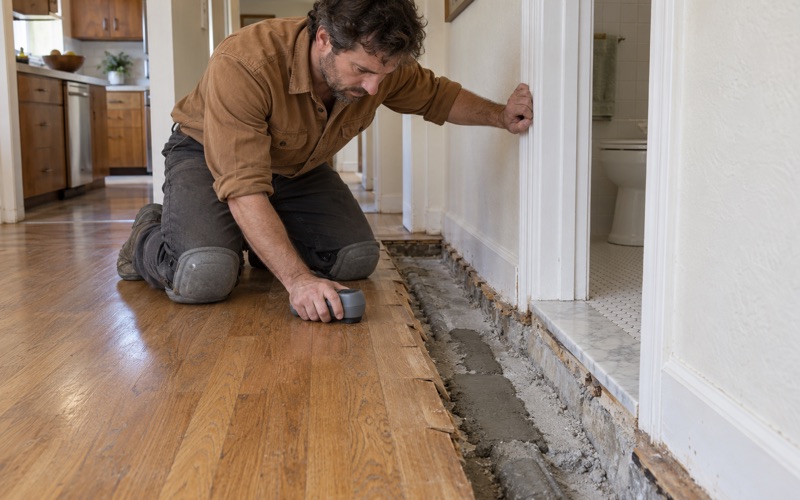
Heavier use also brings more water. More showers, more cooking and more mopping mean more chances for a spill to sit at a board seam. Around toilets, tubs and exterior doors we probe for soft spots and trace them down to the subfloor before pricing any finish work, because fresh finish over a soft plywood subfloor only hides the problem for a season.
Lead-Safe Prep in Older Houses
With 62.5 percent of units here built before 1960, most houses we work in are pre-1978 housing. We follow lead-safe work practices under the EPA Renovation, Repair and Painting rule on those homes, which matters most when sanding near painted baseboards, door casings and shoe molding. In a house where children and adults are around all day, containment and cleanup are not optional steps.
Looking for wood-flooring closer to Norwalk? See Norwalk Wood-Flooring.
Choosing a Finish for a Full House
Finish choice matters more in a crowded house than almost anywhere else, because the finish is the layer that actually takes the traffic. The wood underneath is only hurt once the coating wears through. We walk owners through three questions: how hard the finish is, how easily it can be recoated, and how long the household has to wait before using the room.
Waterborne and Oil-Modified Polyurethane
For most full houses we recommend a quality waterborne polyurethane. It cures faster, carries less odor while the family is home, and stays clear rather than ambering over time. Every product we apply is legal in the South Coast air basin under SCAQMD Rule 1113, which sets the wood coatings VOC limit at 275 g/L, so the choice is always among compliant finishes.
Oil-modified polyurethane is still an option for owners who want a warmer tone, but a room waits longer before it can be used, and the smell lingers in a house where nobody is leaving. A hardwax oil finish is easy to spot-repair, which helps in a kitchen, though it asks for more regular upkeep than most busy households want to give.
Sheen, Species and Hardness
Sheen level makes a real difference under heavy use. Satin and matte finishes hide the fine scratches and dust that a gloss finish shows under every window. When new boards are going in, species matters too: the Janka hardness rating tells you how well a wood resists dents, and white oak, hickory and maple hold up better than softer choices.
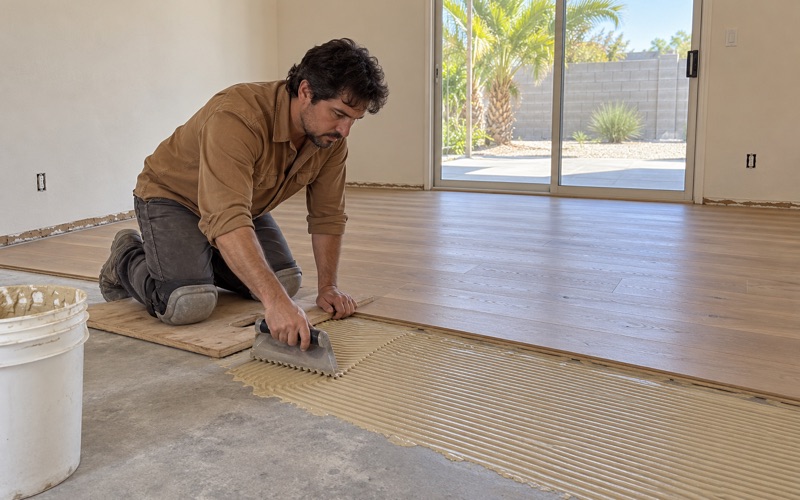
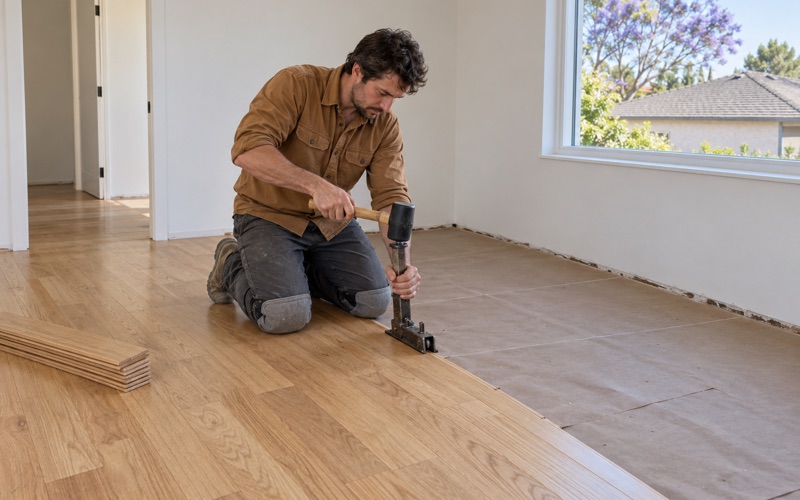
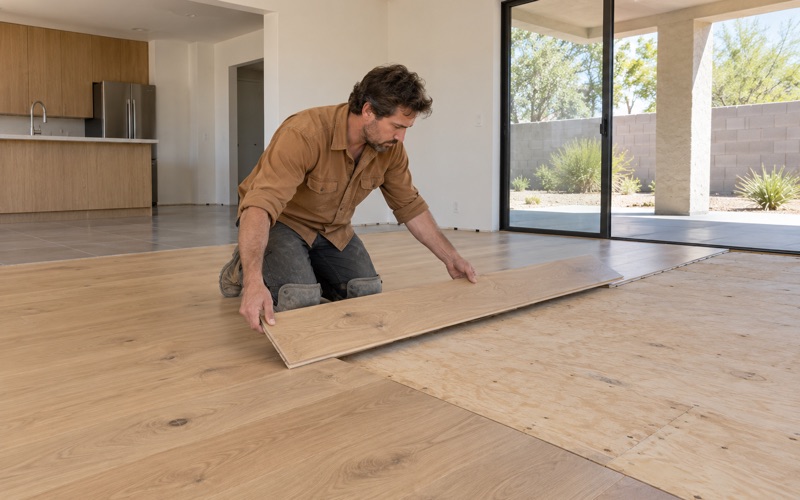
When we replace boards or add a room, we check the moisture content of the new material with a wood moisture meter and let it acclimate before installation, following NWFA installation guidelines. The readings go on paper, which is useful later if anyone asks why a board moved after a humid stretch.
Recoating Before It Wears Through
The least expensive way to keep a busy floor looking good is to recoat before the finish wears down to bare wood. A screen and recoat lightly abrades the existing finish and adds a fresh coat, with no full sanding and a short cure. Along the main traffic paths of a full house, doing that on schedule can postpone a full refinish for years.
Small habits stretch that interval further. Felt pads under chairs, a mat at each exterior door and a rug where people stand at the sink take the grit before it reaches the finish. We point these out at the walkthrough because they cost little and protect the most expensive part of the job.
Refinishing Room by Room While Everyone Stays
Most households here cannot leave for a week while floors are sanded and finished, and we do not ask them to. Instead we split the house into zones and work through them in an order agreed ahead of time, so there is always a path to the kitchen, a bathroom and somewhere to sleep.
Sequencing the Rooms
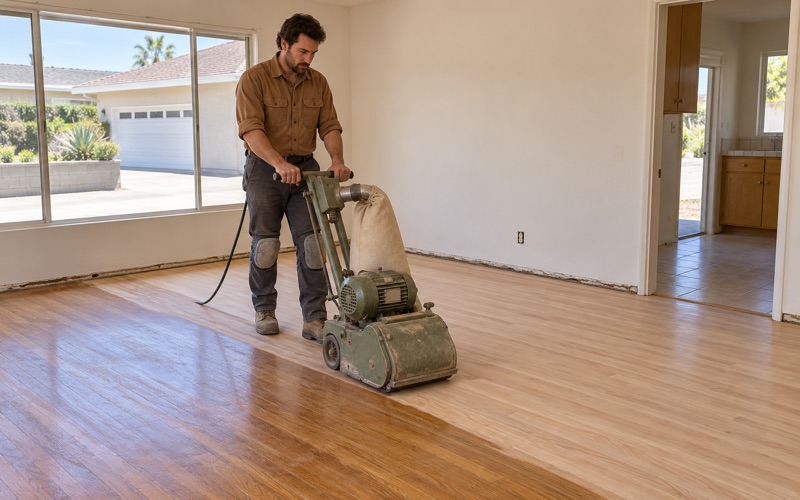
We usually start with bedrooms whose contents can be stacked in another room for a day or two, then move to hallways, and finish with the living and dining areas. Hallways are the tricky part, since every other room depends on them. We often split a hall across two days, leaving a walkable strip while the other half cures.
Each zone gets the full sequence: moving furniture, sanding through the grit sequence with a drum sander and edger, a final orbital sander pass, then finish coats. A dustless sanding system keeps most of the dust out of the rooms people are living in, which matters when someone is cooking or sleeping on the other side of a wall.
Rooms That Are Always in Use
Some rooms never really close. For kitchens and family rooms we schedule around meals and often lay the last coat late in the day, so it cures overnight while the house sleeps. Where a room truly cannot be emptied, a screen and recoat is sometimes the smarter choice than full sanding, because the space returns to light use much sooner.
Furniture is its own puzzle in a full house. Beds, bunks, dressers and extra seating have to go somewhere while a room is worked, so we map where each piece will sit before the first day. That keeps the finished rooms from filling up with furniture before their finish is ready to carry it.
The Written Cure Schedule
Before we start, you get a written cure schedule for every zone. It lists when each room can take foot traffic in socks, when shoes are fine, and when furniture and rugs can go back. Waterborne finishes generally allow light foot traffic within a day, but full cure takes longer, and rugs are what people most often put back too early.
In a house with a lot of people, the schedule does a second job: everyone can read it. Kids, relatives and roommates can see which doors stay shut and why, which spares the new finish a stray footprint at the worst possible moment.
Repairs, Moisture and Paperwork Before the Finish
Not every worn floor needs a full refinish. Many need a repair first, and the order of those jobs matters. We look at what is under the finish before we talk about color or sheen, because heavy use has a way of exposing problems a quieter house would have kept hidden for years.
Boards, Squeaks and Soft Spots
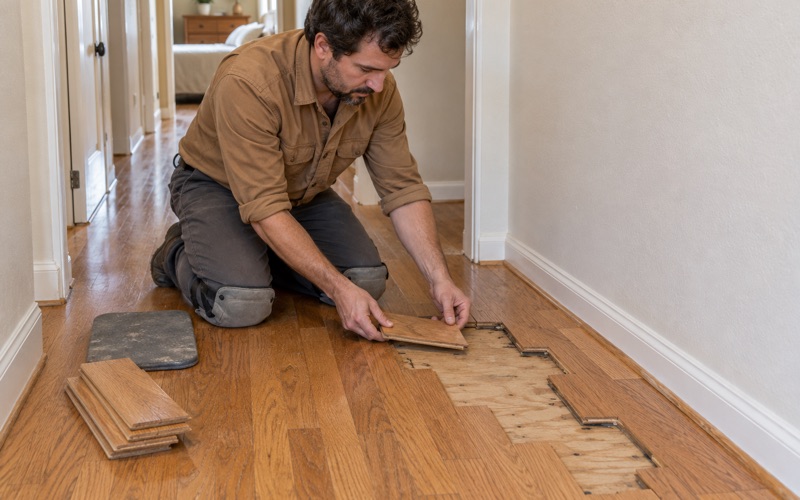
Worn or damaged boards can often be fixed with a weave-in repair that ties new boards into the existing floor rather than cutting a straight seam. Squeaks usually come from movement between the boards and the subfloor or a floor joist, and we locate the source before fastening anything. Where water has reached the subfloor, we open it up and rebuild before any finish floor goes back.
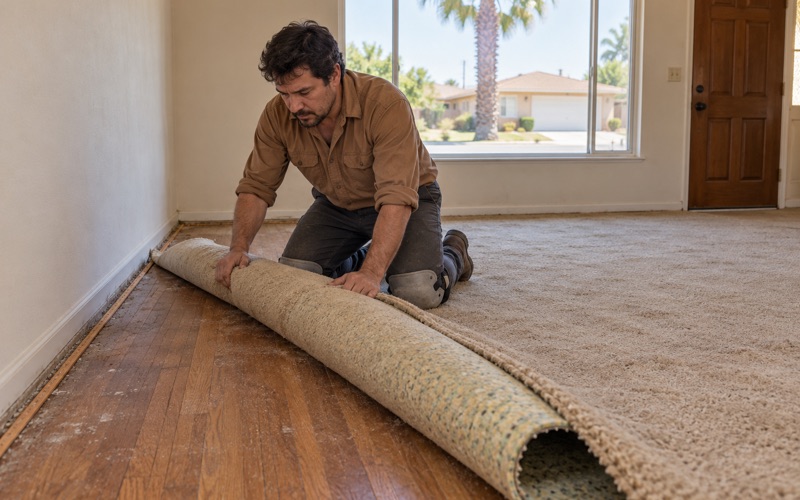
If carpet comes up as part of a job, the carpet tack strip and staples come out first, and whatever flooring sits underneath is assessed board by board before anyone quotes a replacement. Old parquet gets the same care, with the adhesive beneath it treated as a possible asbestos question before any sanding starts.
Moisture and Water Damage
When a leak or overflow has soaked a floor, we wait until the area is dry and document the drying with moisture readings and photos an insurance adjuster can use. If a plumbing line was the cause, we rebuild only after the plumber has repaired or rerouted it. Cupping often settles once moisture comes down, which is why we measure before recommending new boards.
Paperwork for Owners and Landlords
South Whittier is governed by the Los Angeles County Board of Supervisors as part of Supervisorial District 4, and County Public Works handles building and safety through its South Whittier Building and Safety Office in Norwalk. Public Works issued 768 building permits in South Whittier in FY 2023-24, a reminder that plenty of owners here are working on their houses.
Owners hold 64.7 percent of occupied units and renters the rest, so our paperwork has to serve both. Every estimate is written and itemized by room, stair and repair, clear enough for an owner planning a budget, a landlord keeping records or an adjuster reviewing a claim to see exactly what is being done and in what order.
- 20+ Years in Wood Flooring
- Itemized Written Estimates
- Lead-Safe Sanding