Buena Park Wood Flooring offers wood-flooring in Whittier backed by more than 20 years in the trade, and a good share of that work happens inside houses older than the postwar tracts most people picture in this part of the county. We sand, repair, patch and refinish existing floors, and we install new hardwood where an old floor genuinely cannot be saved.
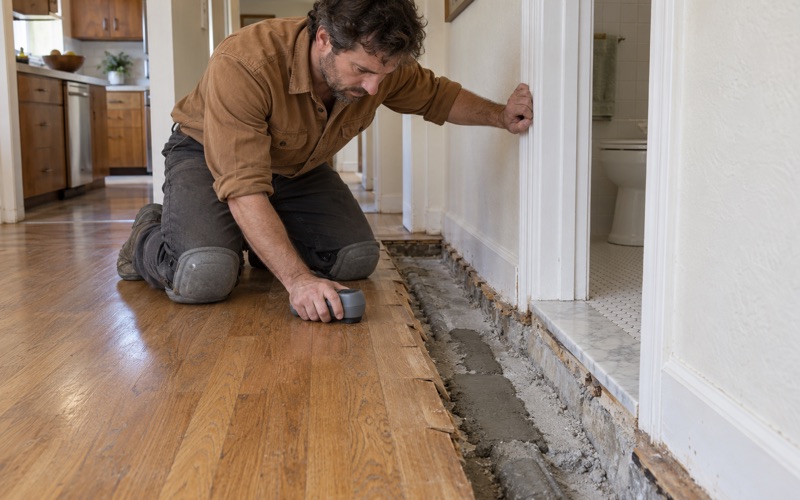
Our approach starts with measurement rather than a sales pitch. We take moisture readings in the wood and in any concrete slab before material is ordered, write the numbers down, and trace soft spots near tubs, toilets and doorways to the subfloor before anyone prices a finish floor. Every estimate is itemized, so an owner, a seller or an adjuster can see exactly what is included.
In an older house the questions that matter are practical: what is under the carpet, what the old adhesive might contain, whether the boards can take another sanding, and how long each room stays off-limits. Below we cover how we answer those questions, and how the city’s historic rules frame floor work that stays indoors.
Whittier’s Pre-1941 Vintage Houses and the Ordinance
Whittier was incorporated on February 25, 1898, and its housing record still shows that early start. Census figures count 4,152 of the city’s 29,734 housing units, 14.0 percent, as built in 1939 or earlier. The 1950s remain the largest building decade at 37.2 percent of units, but a substantial older layer sits beneath that postwar growth, and it is where the city’s historic rules reach furthest.
Vintage Status Without a Landmark Plaque
The city’s historic preservation guidance, issued under its historic resources ordinance in Whittier Municipal Code Chapter 18.84, treats buildings constructed before 1941 as vintage buildings even when they are not designated or eligible landmarks. That matters to owners who have never thought of their house as historic. A 1920s bungalow on an ordinary block can fall under the ordinance simply because of the year it was built.
We ask the build year at the first visit for that reason. It tells us what to expect under the finish, from old cleat nails and flooring staples to layered coatings, and it tells the owner whether the city’s historic framework touches any part of a larger project. The floor itself is usually the smaller question; the rest of a renovation is where the rules tend to matter.
A Certificate of Appropriateness Comes First
According to the city’s guidance, permits for work on a historic resource or vintage building are not issued until a Certificate of Appropriateness Application has been approved by the City of Whittier. The same guidance describes a waiver path: work done in substantial accord with the ordinance’s guidelines may receive a Certificate of Appropriateness Waiver from the Secretary of the Historic Resources Commission.
Planning Services, part of the Community Development Department on Penn Street, administers historic preservation. We do not tell an owner whether any particular permit applies to their project; that answer belongs to the city. What we do is describe the scope in writing clearly enough that the owner can ask Planning Services a precise question and get a precise answer before anything is scheduled.
Looking for wood-flooring closer to La Habra Heights? See La Habra Heights Wood-Flooring.
Floor Work That Stays Inside the House
The city’s guidance draws a clear line: interior work that does not alter or change the exterior of a building is not subject to a Certificate of Appropriateness Application. Interior changes to historic landmarks, the guidance adds, are generally not regulated by the Historic Resources Ordinance unless the change affects the exterior. Most refinishing and repair happens entirely indoors, which is where our work lives.
What Indoor Floor Work Looks Like Here
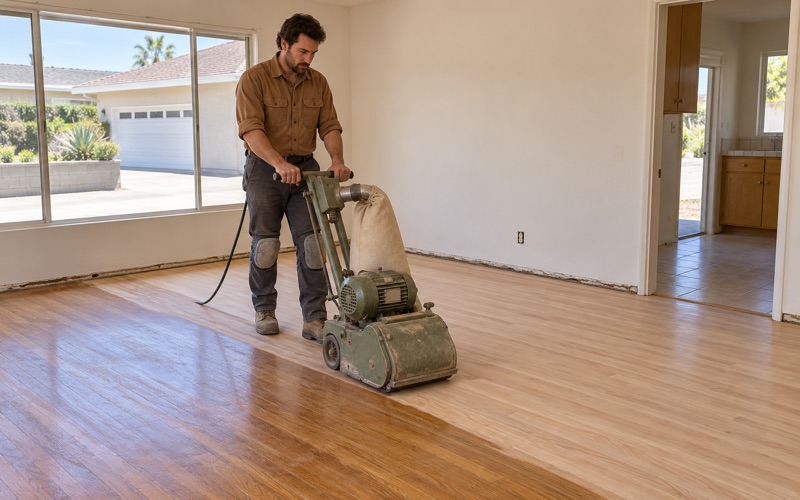
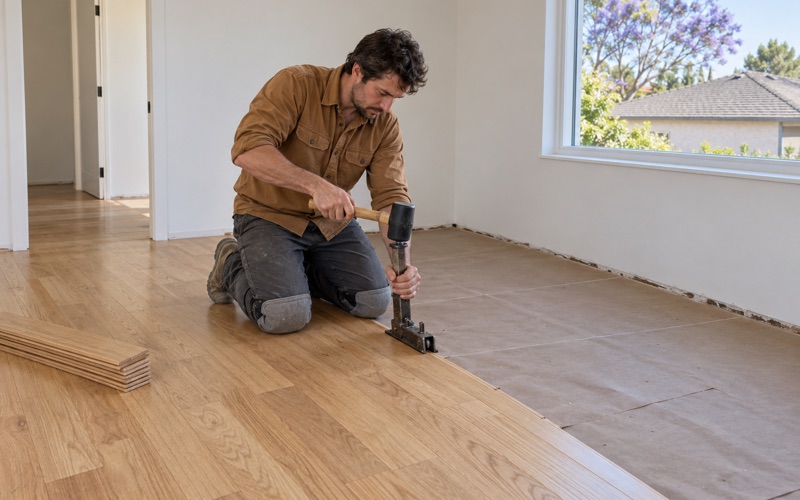
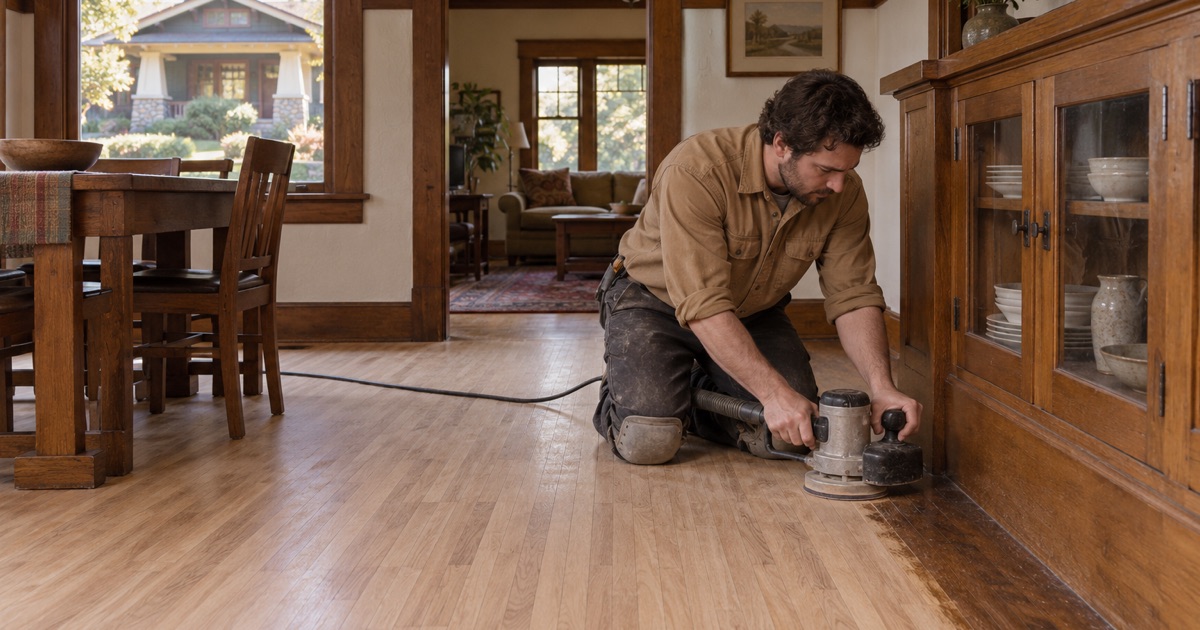
A typical job in an older Whittier house is sanding and refinishing existing boards, weaving in replacement boards where old damage or a removed wall left a gap, and quieting squeaks. We work a measured grit sequence with a drum sander, edger and orbital sander, all connected to a dustless sanding system so fine dust stays out of old plaster, built-ins and trim.
Before sanding, we check how much wear layer remains above the tongue at an exposed edge or floor register. Boards sanded several times over the decades may have little left to give. A screen and recoat can sometimes refresh a sound finish without removing more wood, and we would rather say so than sand through a board that cannot be matched.
Matching Boards in Older Rooms
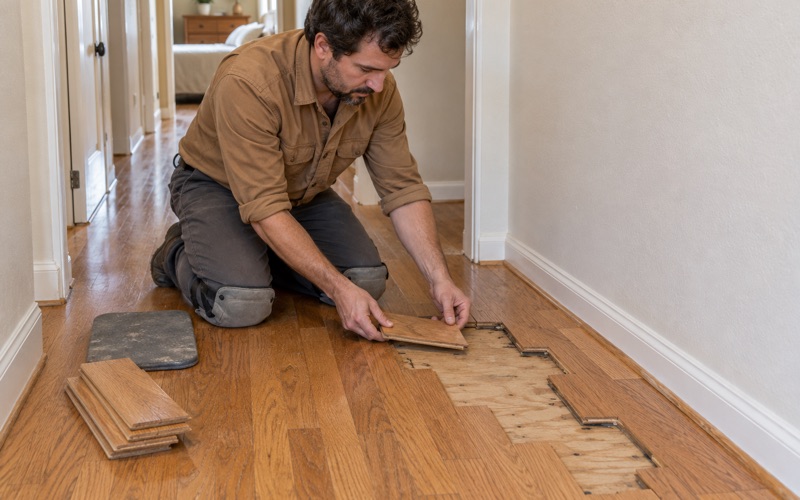
When a vintage house needs board replacement, we match width, thickness and species by pulling a sample rather than guessing from the surface color. Old stain and aged finish make species hard to judge from the top, and an orange oak or gray oak tone can hide what the wood actually is. A weave-in repair staggers new boards into the existing field.
Once the whole room is sanded and finished together, a properly woven patch disappears into the floor. Blotchy stain on older wood is the other common trap, so we test stain and finish on a hidden section and let the owner see it dry before the full floor is committed.
When a Project Reaches the Outside
The exception in the guidance matters. A project that pairs new flooring with work that changes the exterior, such as a replaced exterior door or new windows, is no longer purely interior, and the owner should confirm its historic review status with the city first. We keep the floor scope separate in the estimate so indoor work is not held up by a question about the outside.
Hadley-Greenleaf, College Hills and the Other Districts
Whittier has four locally designated historic districts: Hadley-Greenleaf, Central Park, College Hills and Earlham. Properties inside a district fall under the historic resources framework alongside vintage buildings and landmarks, and the same indoor line in the city’s guidance applies to them. The districts also group houses of similar age and style, which shapes what we expect to find underfoot.
Hadley-Greenleaf’s Bungalows
Hadley-Greenleaf was designated in 1990 and holds more than 190 properties, predominantly Craftsman bungalows, with Victorian cottages and Spanish and Mediterranean revival homes among them. In a bungalow, the floor often runs through living and dining rooms, under built-in cabinets and around hearths, so a refinish has to respect those edges rather than drive a sander hard against woodwork.
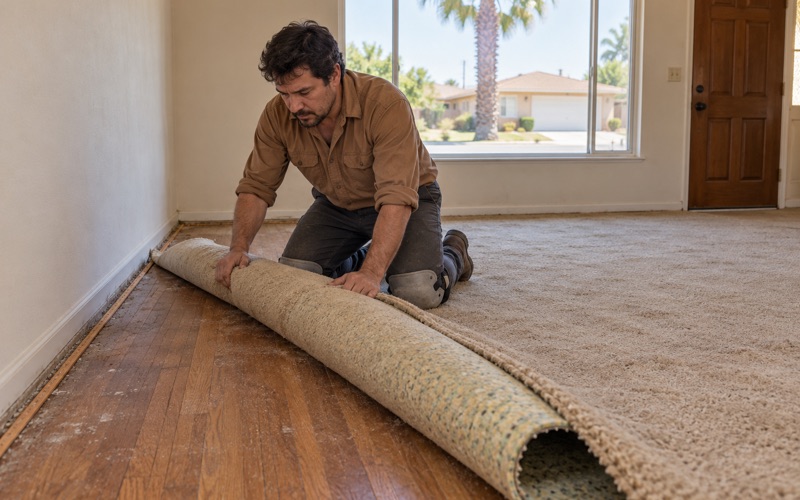
Carpet in houses like these often hides a floor worth keeping. Before quoting anything, we pull back a corner, lift carpet tack strip where it has bitten into the boards, and assess the wood board by board. Staple holes and tack strip scars usually fill and sand out; pet urine stains and deep cupping are a different conversation, and we have it openly.
College Hills and Earlham
College Hills was subdivided in 1923 as Whittier’s first planned hillside development and was designated in 2002 with 97 properties. Earlham’s seven properties represent an early Whittier College neighborhood from 1903 to 1940. In 2025 the Tebbetts-Coffin House on Penn Street was designated a local landmark, a designation the city said ensures the enhancement of the Earlham Historic District.
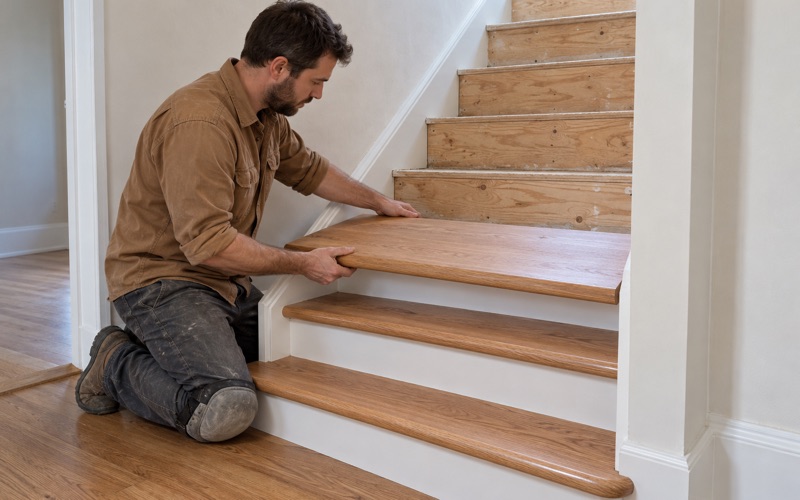
Houses of this range vary widely, so we never assume a floor type. We confirm what is there at the visit and plan sanding, repair and finish around that wood. Stairs get their own line on the estimate, priced per tread and riser, because an old staircase with worn nosings takes far more handwork than its square footage suggests.
A National Register Farmhouse
The Orin Jordan House on Comstock Avenue, a two-story wood-frame farmhouse dated 1888-1890, is on the National Register. Its 1979 nomination described the interior woodwork as original and noted the house had been moved intact about 300 feet in 1926. Some of Whittier’s oldest interiors have survived long histories, and work inside them calls for patience.
Planning a Refinish in an Older Whittier Home
Planning starts with what the house is made of, then moves to the order of work and when the household gets rooms back. Many owners stay home through a refinish, so we build the schedule around living in the house rather than around an empty one.
Moisture Readings and Soft Spots
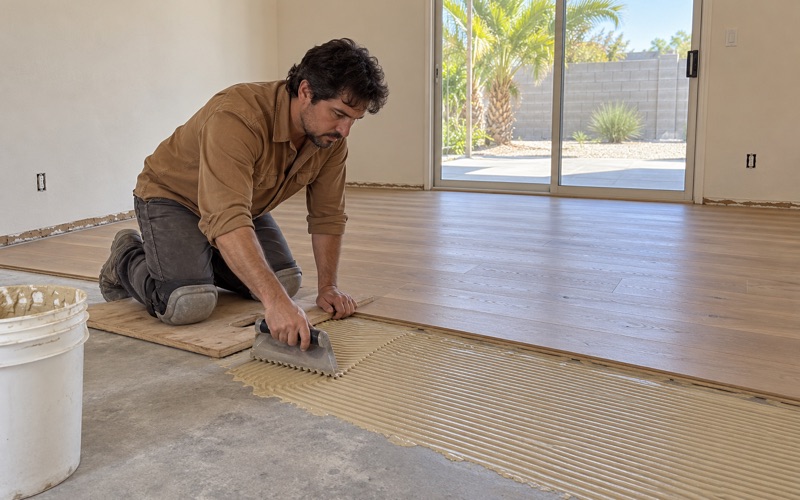
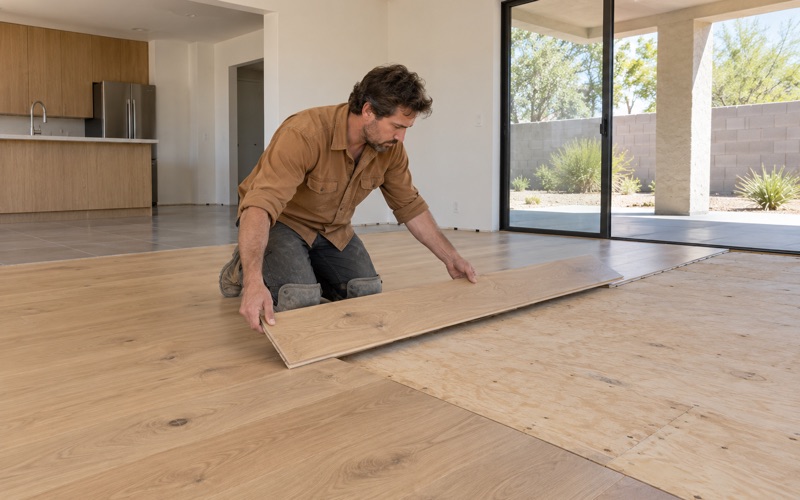
We record moisture content across the floor with a wood moisture meter and compare it against new material before installation, allowing acclimation under NWFA installation guidelines. Where a room sits over concrete, we test it with ASTM F2170 in-situ relative humidity probes or a calcium chloride moisture test. Every reading goes into the written job file the owner keeps.
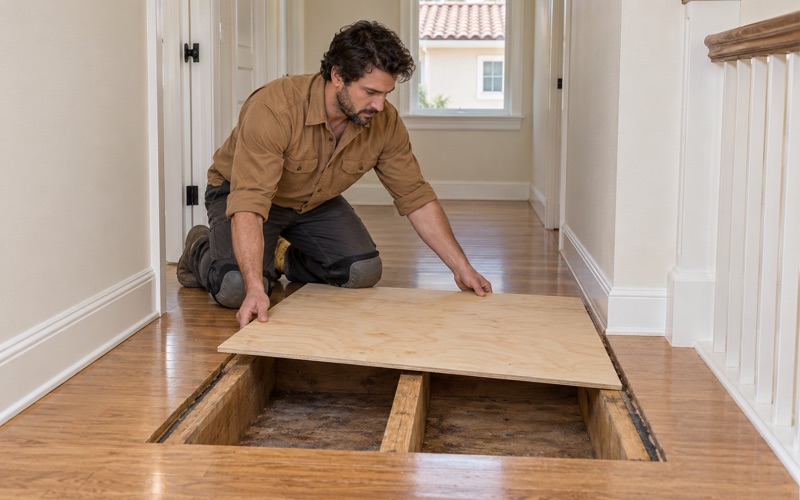
Soft spots near a toilet, tub or exterior door are traced to the subfloor before we price anything on top. In an older house, a spongy area can mean a long-running leak, a damaged floor joist or old drywood termite activity, and the repair order matters. After water damage, we dry, document with photos and readings an adjuster can use, then rebuild.
Lead, Old Adhesives and Parquet
Every house built before 1978 gets lead-safe work practices under the EPA Renovation, Repair and Painting rule, which covers painted baseboards, trim and shoe molding disturbed during floor work. In a city where so much housing is decades old, this is routine for us. We contain the work area, control dust at the source and clean thoroughly before the family returns.
Older parquet and 9x9 floor tile sometimes sit on black mastic, and we treat that adhesive as a possible asbestos question before anyone scrapes or sands it. An asbestos survey comes first. Where old parquet is sound, we would rather restore, patch or lighten it than tear it out by default.
Finish Choices and a Written Cure Schedule
Finishes come from products legal to apply in the South Coast air basin, where SCAQMD Rule 1113 sets a 275 g/L VOC limit for wood coatings. Waterborne polyurethane, oil-modified polyurethane and hardwax oil each look and wear differently on older boards, so we lay samples on the actual floor before deciding. A lower sheen level tends to soften the character marks an old floor carries.
Every job ends with a written cure schedule showing when each room can take socks, shoes, rugs and furniture, so a household can plan meals, pets and sleep around the work. The estimate stays itemized by room, stair and repair, which means an owner, a buyer’s agent or an adjuster reads the same numbers we do.
- 20+ Years in Wood Flooring
- Itemized Written Estimates
- Lead-Safe Sanding